

























































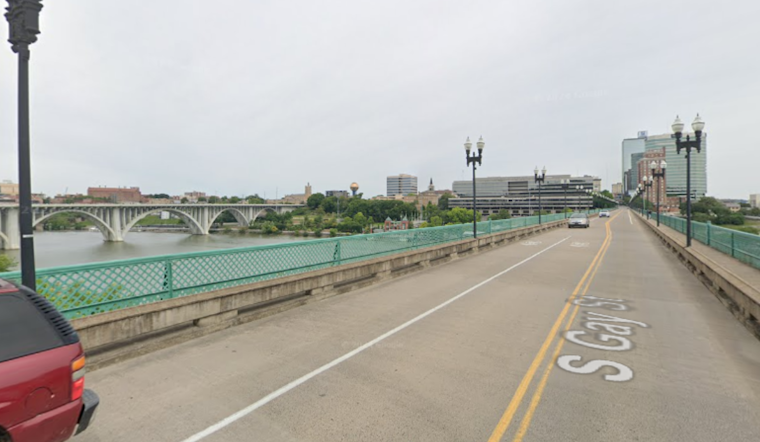
The Knoxville City Council moved to address the closure of the historic Gay Street Bridge by passing a budget amendment that allocates funds for its repair. The bridge, an essential conduit linking downtown Knoxville to South Knoxville, has been shut down since June following the discovery of structural issues. WATE reported that last night, the council approved an expenditure of $850,000 for an engineering firm to conduct a professional analysis and design services "specific to future repairs for the Gay Street Bridge."
This financial commitment will impact the city's operating and capital budgets for the 2024-25 fiscal year. The bridge was fully closed to vehicular and pedestrian traffic due to the compromised element identified in a routine Tennessee Department of Transportation inspection. The amendment will officially go into effect following a second reading scheduled for October 1. Despite steps to fully understand and eventually rectify the bridge's problems, immediate reopening is not on the horizon, as further studies are mandated.
Further reporting from WVLT informs that the council's vote was nearly unanimous, with an 8-1 decision to adjust the city's Operating and Capital budgets accordingly. The ordinance raised the Capital budget by more than $3 million, which enveloped the $850,000 intended for the bridge's analysis and repair.
While the bridge's disrepair continues to prevent its use, Knoxville Mayor Indya Kincannon expressed understanding but tempered optimism in a statement obtained by Knox News, stating, "As soon as possible' isn't as soon as we'd like." The allocated funding will, for now, only cover the costs associated with the assessment and design of repairs. The actual expenses required to carry out the repairs and the timeline for completion remain determined. Knoxville's director of engineering, Tom Clabo, suggested that parts of the bridge might eventually be opened to pedestrians and bicyclists before it can support vehicle traffic. However, a comprehensive investigation was deemed necessary before any such decision could safely be made.





