

























































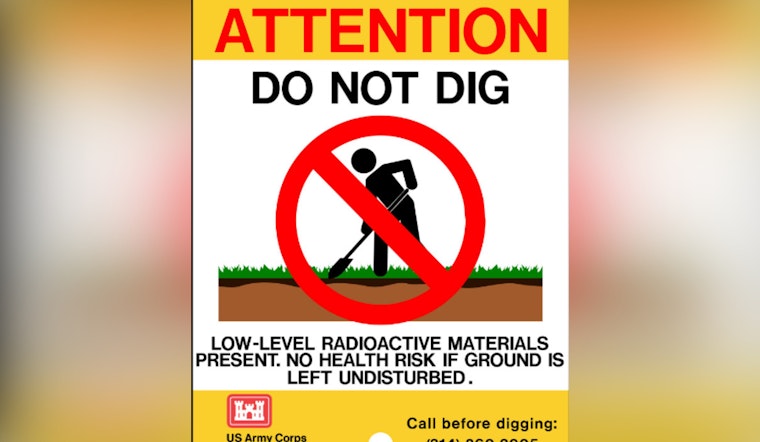
Residents in North St. Louis County were informed by the U.S. Army Corps of Engineers that warning signs will be put up in November. These signs will caution against disturbing soil that contains low-level radioactive waste from World War II atomic bomb projects, as reported by FOX2now and KSDK. The signs will feature the message "Attention. DO NOT DIG. Low-level radioactive materials present. No health risk if ground is left undisturbed," a sample of which was shared during the virtual outreach meeting with local residents. The Missouri Coalition for the Environment has criticized the language on the signs for potentially underplaying the risk by using the term "low-level."
The installation of about 196 signs depends on property owner agreements and is set to begin in mid to late November. These signs will mark 19 locations across the U.S. affected by nuclear waste from past national defense and energy activities, mainly related to uranium processing from the Manhattan Project by Mallinckrodt, a St. Louis company. Grassroots advocacy groups have been pushing for better public communication about these sites, calling for more transparency and precaution.
Despite some improvements, activists continue to push for better hazard communication. Ashley Bernaugh criticized the lack of the universal radioactive warning symbol on the signs, arguing it could confuse non-English speakers, especially with the growing number of Latino immigrants in North County. She emphasized the need for signs to be easily understood across language barriers. This effort to install warning signs marks a significant change from the Corps' past approach, which often ignored community concerns about radioactive waste hidden for decades. It also responds to rising health issues in affected areas, where rare cancers linked to radioactive exposure are increasingly common, as reported by St. Louis Business Journal.





