

























































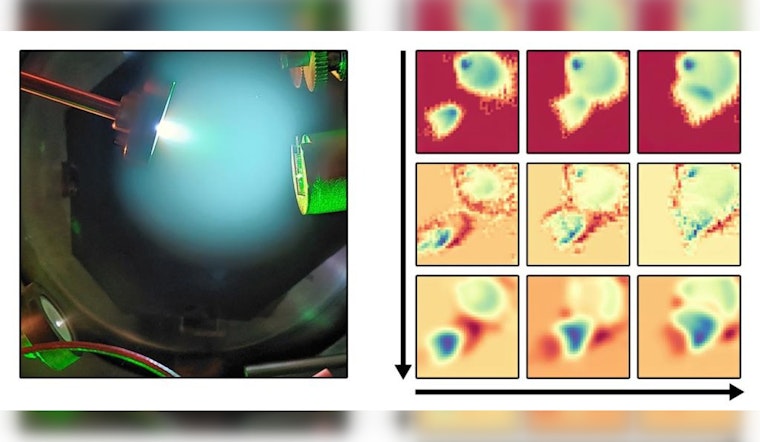
In a significant advancement for materials science, researchers at Oak Ridge National Laboratory (ORNL) have successfully implemented a deep learning model to efficiently analyze plasma plume dynamics in real time. The work focuses on a manufacturing process called pulsed laser deposition, or PLD, which is pivotal in developing ultrathin films for various high-tech applications.
The team's deep learning approach was designed to quickly assess the properties of the plasma plume—essentially a cloud of vaporized material created by laser pulses. The AI system has learned to effectively streamline checking if the "color, shape, size and brightness look the same as they did the last time a good sample was made," explained Sumner Harris, lead author of the study, in a statement obtained by ORNL. This technological leap not only automates quality control but has also begun to uncover new insights into particle behavior during the formation of these advanced materials.
Before this development, manual assessment of the plasma plume required a substantial amount of time and expertise, limiting the pace at which new materials could be developed and studied. The AI-driven model represents a paradigm shift, potentially accelerating discoveries in the field of material synthesis tenfold. The implications are considerable for industries reliant on electronic and energy technologies, which are constantly seeking improvements in material performance and reliability.
Building upon ORNL's previous work in automating PLD systems, this new AI application promises to more efficiently monitor the synthesis of materials, thereby significantly advancing the capability of researchers in this domain. The ORNL team's contribution to the field could quickly transform the way materials are not only monitored but also how they are innovated in the lab setting. Detailing the implications of this work, Harris told ORNL, "This innovation builds on ORNL’s previous development of an autonomous PLD system that accelerates materials discovery tenfold."
The full impact of these advancements will only unfold over time, but it is clear that this integration of AI and materials science holds considerable promise for the future of technology development. As industries seek ever more efficient processes and breakthrough materials, tools like the one developed by Harris and his team at ORNL will likely play a critical role.





