

























































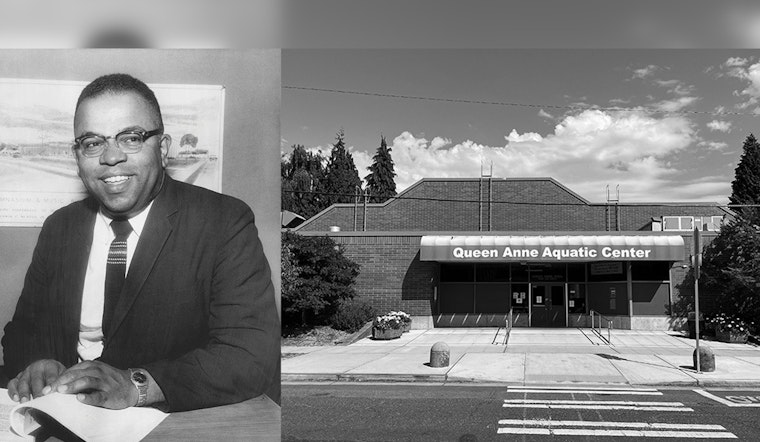
The recently designated Historic Landmark, Queen Anne Pool, reflects more than just a space for communal gathering and fitness in one of Seattle’s oldest neighborhoods. This modest brick building, with its inconspicuous blue awning, signifies an era of transformation led by an individual who pushed the boundaries of architecture and social justice – Benjamin McAdoo, Washington’s first licensed Black architect.
McAdoo was no stranger to the harsh realities of racial segregation. As a young man, he was restricted to three hours a week in public pools in his hometown of Pasadena, dubbed "International Day." Facing continuous adversity, he moved to Seattle in 1944 and began to lay the foundations for a legacy that would eventually challenge the very exclusivity he had once endured. Despite thriving racism in his adopted city, McAdoo became a beacon in Seattle's architectural and cultural landscape.
According to a recent post by the Seattle Front Porch, Maureen Elenga, Chair of Queen Anne Historical Society Preservation Committee, emphasized the poignant irony of McAdoo's achievement by stating, "I cannot understate the significance of Washington’s first registered Black architect designing a public building for use in a neighborhood in which he would not have been welcomed to live." It's a telling reflection of the progress achieved through perseverance and conviction.
McAdoo's designs were often modernist, integrating regional and cultural influences—a testament to the diverse commercial background of his family's businesses and his intercultural home environment. His commitment to his work paralleled his dedication to social causes, evident in his role as president of the local NAACP chapter and as a columnist addressing issues such as police brutality, school segregation, and redlining.
Despite the progressive shifts in Seattle's racial policies following Martin Luther King Jr.'s assassination, the Queen Anne Pool designed by McAdoo still tells a tale of a city grappling with its history of segregation. Forward Thrust initiatives in the late 1960s funded public recreation improvements, enabling the construction of Queen Anne Pool as part of these reforms. McAdoo's pool design, with its welcoming modern elements, was a statement piece that championed inclusivity and mirrored his belief that modern design should be for everyone, not just the privileged.
Queen Anne Pool, while perhaps seeming unremarkable at first glance, embodies a break from a legacy of exclusion to one of unity. The significance of its historical background, as noted by the Seattle Front Porch, is not just architectural but emblematic of the strides taken toward racial equality. Black Heritage Society of Washington State President, Stephanie Johnson Toliver, attests to this, stating, "Benjamin F. McAdoo, Jr. was an architect 'of and for the people.'"
Today, Queen Anne Pool remains vital to its neighborhood, offering a range of programs and events to Seattle Parks and Recreation's diverse community. In a city with a past shadowed by segregation and discrimination, every stroke in this pool is a reminder of the progress achieved — and the ongoing efforts required to maintain a society that purports to value equity and diversity.





