

























































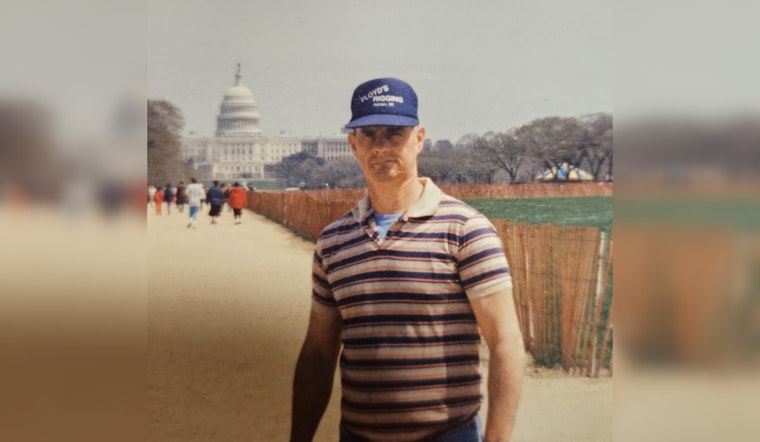
The Mohave County Sheriff's Office has confirmed that human remains found in 2009 near the Hoover Dam have been identified as belonging to William Herman Hietamaki, a native of Michigan. These remains were discovered in the U.S. Highway 93 by construction workers preparing to pour cement. For nearly 15 years, the identity of the remains remained unresolved until a recent breakthrough was achieved through genetic testing.
As detailed in FOX5 Vegas, the identified items included a sun-bleached pair of blue jeans, a red t-shirt, a black athletic shoe, and a green sleeping bag, all weathered by time and the harsh desert elements, alongside the skeletal remains. After nearly 15 years of dead ends and thorough detective work, advancements in technology provided a crucial breakthrough in uncovering Hietamaki's story.
Investigations over the years included a failed attempt at DNA identification through the Arizona Department of Public Safety and an unsuccessful sample sent to the University of Texas. These details, reported by the Las Vegas Review-Journal, illustrate the challenges of a case that remained unresolved, filled with false leads and dead ends.
It wasn't until an April report from Othram Inc., a genetic lab that received a specialized grant for investigative work, that a DNA profile was created. This profile was uploaded to a genealogy database, revealing Hietamaki's ancestral roots in Michigan. The leads generated helped investigators contact Hietamaki's siblings, confirming his identity through genetic testing. According to the sheriff's office, "Hietamaki's family now has closure due to their dedication in identifying John and Jane Does," acknowledging the resolution of a long-standing mystery, as per Las Vegas Review-Journal.
Hietamaki, born on April 4, 1950, was known for his wandering lifestyle, which began right after high school. He traveled extensively throughout the southwestern United States, spending much of his life on the road.





