

























































Residents of Boulder City are gearing up to celebrate Public Power Week from October 6 through October 12, highlighting their status as one of the nation's most economical electricity suppliers. Much of Boulder City’s cheap power is generated from renewable sources, with hydroelectric plants like Hoover Dam and Glen Canyon responsible for more than half. According to Boulder City announcements, solar energy accounts for nearly a quarter, and natural gas fills out the remaining quarter of the energy mix.
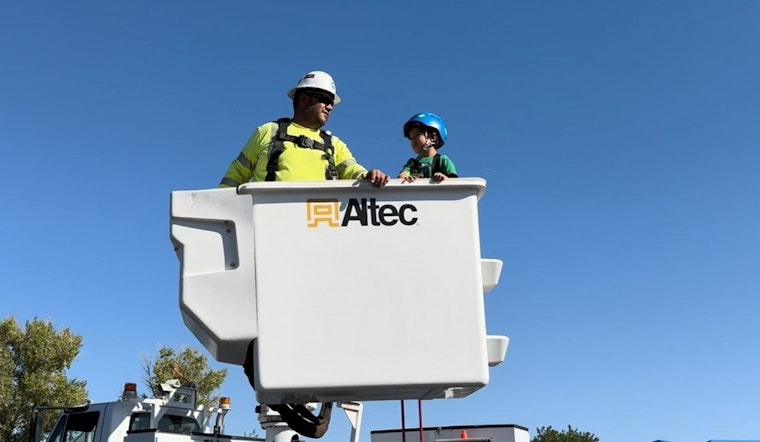
To both honor the week and educate the younger generation, the Electrical Division of the Boulder City Utilities Department has taken to actively engage with local youth. Students from Andrew J. Mitchell and Martha P. King Elementary Schools had the chance to check out equipment and trucks, as well as watch demonstrations about electricity in the week before Public Power Week. In a statement obtained by Boulder City's official announcements, Utilities Director Joe Stubitz expressed his hope "My hope is that we inspire our future workforce by showing children some of the great work that we do. We also teamed up this year with Overton Power District 5, who brought a trailer to show kids just how dangerous live wires can be."
Boulder City stands as an enterprise fund, a self-sufficient arm of the government that provides utilities without the mandate to generate profit. The local City Council of Boulder City governs the community-owned utility, with a Utility Advisory Committee composed of residents contributing recommendations. With a service delivery to more than 8,000 residential and business customers, Boulder City represents one of 2,000 public power utilities in the country that provide electricity to approximately 49 million Americans.
Reflective of a nationwide trend where public power utilities have the lowest overall rate in 36 states, Boulder City maintains its competitive edge. In 2022, the average residential rate for public power was cited to be 14 cents per kilowatt-hour. This positions public power customers to often pay less, by roughly nine percent, compared to patrons of alternative utility types. These statistics were outlined by the American Public Power Association and highlighted by the city's announcements.




