

























































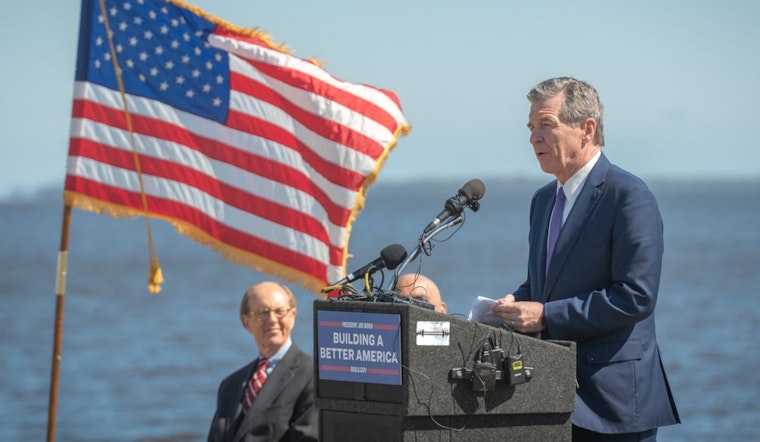
As Hurricane Helene's wrath still resonates across Western North Carolina, resources from state, federal, and local echelons have been directed toward the affected communities. In a press briefing covered by official channels, Governor Roy Cooper, alongside FEMA Administrator Deanne Criswell, outlined the current state of recovery efforts. Amid a backdrop of threats and misinformation, law enforcement has been tasked with ensuring the safety of responders, while FEMA agents push on with door-to-door operations to assist citizens in bouncing back as swiftly as possible.
During his tour of Asheville, Fairview, and Swannanoa, Governor Cooper witnessed firsthand the critical assistance being provided to residents. "Today I traveled to Asheville, Fairview and Swannanoa to see the critical work being done to get people federal assistance, hot meals and other resources they need as they deal with the impacts of Hurricane Helene," he stated. Besides visiting a Disaster Recovery Center at A.C. Reynolds High School, the governor also made stops at the Fairview Fire Department and a community care station offering support and nourishment to those in need.
In response to the environmental concerns wrought by Helene, an executive order issued today focuses on crucial water-related issues. Drinking water and wastewater treatment are at the forefront, with accelerated timelines for repair mandated to ensure public health and safety. The order further instructs the NCDEQ to evaluate utility system damages and aid in the acceleration of cleanup processes across the devastated region.
Task forces, composed of Department of Public Safety personnel, have been scouring for individuals still unaccounted for. While communication outages have exacerbated the situation, the gradual restoration of phone services has reconnected many. However, as of the latest updates, 92 individuals remain missing. Enlisted to assist, more than 3,400 Soldiers and Airmen have mobilized, wielding aviation assets and specialized vehicles to aid those hit hardest by the storm.
FEMA has reported injections of over $99 million in Individual Assistance funds to survivors in Western North Carolina, with applications open to residents through various avenues – by phone, online, or via the FEMA app. A Major Disaster Declaration has broadened the scope of aid to include 27 counties and the Eastern Band of Cherokee Indians, reflecting the scale of Helene's interruption into the lives of many. As the relief efforts persist, FEMA's presence in the state is marked by a substantial cadre of over 1,200 staff members, supporting survivors in shelters and communities and ensuring rapid access to much-needed resources.



