

























































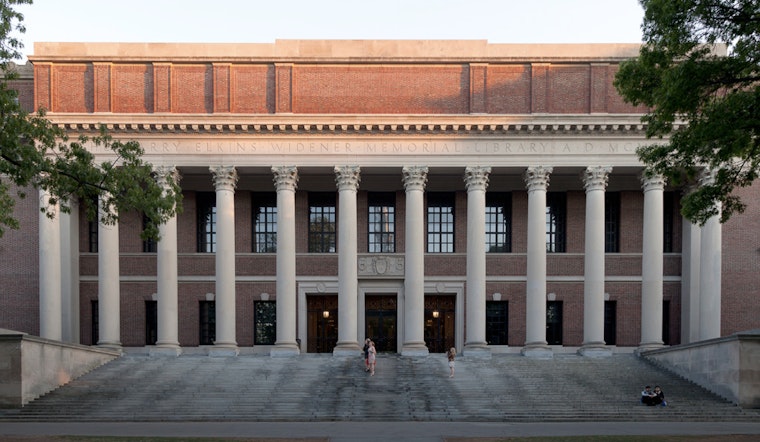
At Harvard University, a silent protest occurred in the historic Widener Library, with approximately 25 faculty members participating in a study-in to express support for students penalized for a prior demonstration. This faculty study-in was organized in response to the library's decision to suspend a dozen pro-Palestine students who had previously held a quiet study session in the same space. According to NBC Boston, the disciplined students had positioned signs on their laptops during the September incident, without creating any disturbance, to protest against Israel's actions in Lebanon.
During the recent faculty-led study-in, Harvard Law School professor Andrew M. Crespo, who joined his colleagues in the peaceful reading, voiced his concern. "If the university is going to be true to what it is all about, it can't start punishing students for reading quietly in the library just because those students have ideas that they want to share with other students and other members in the community," Crespo told NBC Boston. Security personnel monitored the demonstration, taking down names and handing out notices of potential disciplinary consequences, reflecting the similar actions taken against the pro-Palestine student protesters.
As reported by The Crimson, tenured faculty had previously sent a letter to Harvard Library officials, questioning if their access to imperative scholarly resources would be revoked for simply engaging in the act of reading. Their decision to participate in the library study-in was, thereby, not merely an act of solidarity but an ultimatum, testing whether the university would impose similar restrictions on its faculty as it did on its students.
The faculty at the study-in wore black scarves and chose to read texts on dissent, bureaucracy, and censorship, such as Kafka's "The Trial" and Orwell's "1984," as well as Harvard's own Statement on Rights and Responsibilities. When asked to justify the ID check and clarify what constituted a protest, guards provided by Securitas could only confirm that they were following orders, The Crimson detailed. A Crimson reporter confronted one of the student activists who misrepresented themselves as being part of the news staff in order to document the event.
As both professors and student groups continue to interrogate the notion of free expression within academic spaces, Harvard's administration remains in a contemplative state. A Harvard spokesperson indicated that before making any decisions regarding the latest demonstration, the university “will continue to gather information about the action that took place in Widener Library’s Loker Reading Room today,” as noted by The Crimson. The institution is tasked with balancing the need for quiet study spaces with the principle of free expression that universities are expected to uphold.





