

























































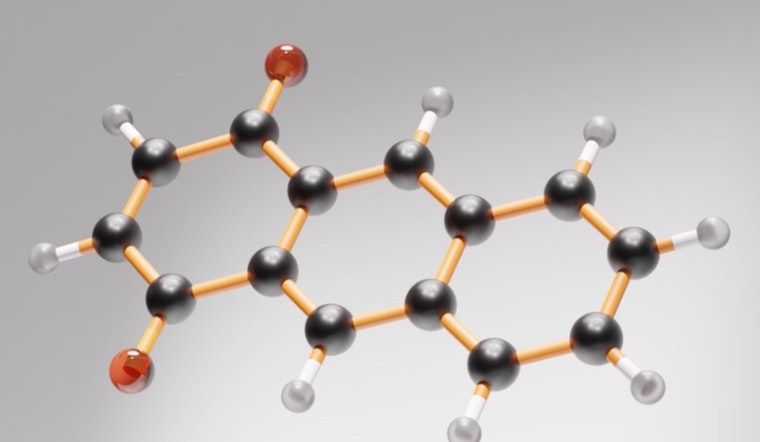
Researchers from MIT, in a collaboration with their Canadian counterparts, have made a significant breakthrough in astrochemistry by identifying a molecule called pyrene in a distant molecular cloud. Pyrene is a member of polycyclic aromatic hydrocarbons (PAHs), substantial carbon-based molecules that might hold the key to understanding the carbon content in space and, by extension, within our own solar system.
Aiding their research efforts, the scientists used the Green Bank Telescope (GBT) in West Virginia to identify an isomer of cyanopyrene, which illuminated the pyrene's presence in the interstellar cloud TMC-1. According to a statement obtained by MIT News, Brett McGuire, an assistant professor of chemistry at MIT, noted, "What we’re looking at is the start and the end, and they’re showing the same thing. That’s pretty strong evidence that this material from the early molecular cloud finds its way into the ice, dust, and rocky bodies that make up our solar system."
As one of the so-called "island of stability," pyrene, and by extension PAHs, are speculated to house 10 to 25 percent of the carbon found in outer space. The latest findings suggest that these molecules potentially contributed to the carbon found in asteroids, comets, and even within the structure of our solar system. Gabi Wenzel, an MIT postdoc and the lead author of the study, told MIT News that previous detections of PAHs were constrained by infrared spectroscopy techniques, which could not definitively pinpoint individual PAH molecules in space.
Adding to the intrigue, an earlier Japanese study in 2023 discovered significant amounts of pyrene on the asteroid Ryugu, which, supported by the new research, links the cosmic carbon cycle from distant clouds to actual celestial bodies. McGuire emphasized the importance of this connection: "We now have, I would venture to say, the strongest evidence ever of this direct molecular inheritance from the cold cloud all the way through to the actual rocks in the solar system," as reported by MIT News. The findings were initially made possible after laboratory synthesis and signal analysis of cyanopyrene, which allowed for its detection using radio astronomy techniques.
While the TMC-1 cloud's pyrene content is a mere 0.1 percent of its total carbon, such a figure is considered significant considering the variety and complexity of carbon-containing molecules observed in space. The research, which marks an advancement in our knowledge of the cosmic abundance of a complex organic molecule, was supported by funding from the Beckman Foundation Young Investigator Award, Schmidt Futures, the U.S. National Science Foundation, the Natural Sciences and Engineering Research Council of Canada, the Goddard Center for Astrobiology, and NASA’s Planetary Science Division Internal Scientist Funding Program.



