

























































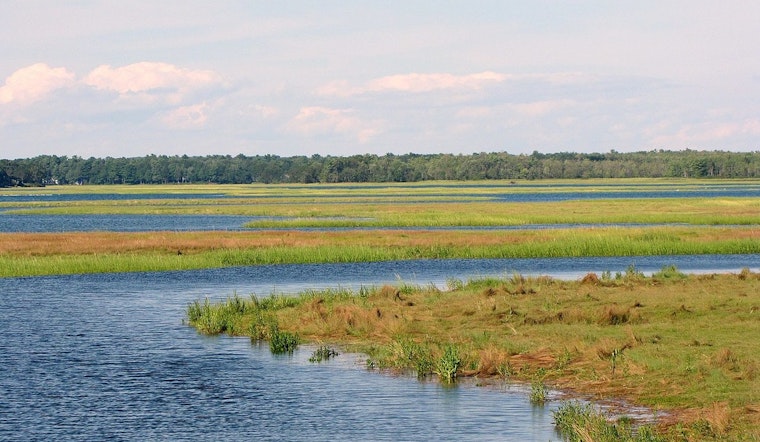
With climates changing at an unrelenting pace and with it, the malevolent rise of sea levels and intensified storms, coastal regions are desperately seeking cost-effective measures to stave off the onslaught. A beacon of hope flickers from Cambridge, where MIT engineers are suggesting a blend of nature and engineering to shield our shores. A recent study published in the journal Communications Earth and Environment advocates for marsh-fronted seawalls, which could provide not only valuable protection but do so with economic savvy.
The U.S. writhed under the weight of a staggering $165 billion in losses due to coastal storms in 2022 alone. Challenging the grim status quo, the MIT report shines a spotlight on enhanced salt marshes, stating these habitats could significantly buttress coastlines against nature's fury. MIT professor of civil and environmental engineering Heidi Nepf, along with graduate student Ernie I. H. Lee, put forth that marshes can attenuate wave impacts, allowing for the luxury of shorter—and cheaper—seawalls behind them. In a statement obtained by MIT News, Nepf emphasized that restoring coastal marshes "is not just something that would be nice to do, but it’s actually economically justifiable."
While the spectacle of waves tempered by marshes isn't new, this study pivots the spotlight to scenarios where expansive marshlands are scarce. It's nested not in empirical drag coefficients but in a kinetic portrayal of plant-wave interaction models, enriched with the morphology of the salt marsh plants themselves. As Lee puts it in a conversation with MIT News, their work extends to urban settings where space is tight, espousing that even "a relatively short marsh, just tens of meters wide, that can give you benefit."
Moving from the theoretical to practical, the research plunged into a fleshed-out case of Salem, Massachusetts, where marsh restoration projects are already afoot. Their computations suggested a robust marsh could trump the need for an extra 1.7 meters of seawall. Nevertheless, compiling the real-world data to feed such a model poses a Herculean task, to which Lee is answering by harnessing drones and machine learning, turning raw imagery into actionable maps. This not only quantifies but adds tangible value to marshlands in their role against floods, as Nepf shared with MIT News.
In a world where federal agencies like FEMA wrestle with parsing out the economic merits of ecological features, this study diligently bridges the gap by quantifying the protection value of marshes into economic currency. Further sealing its utility is the software the team crafted, freely available on GitHub, tailored to assist consultants in appraising nature-based defenses. Bolstering the academic endorsement are voices like Xiaoxia Zhang from Shenzen University, noting that salt marshes present an "environmentally beneficial but also cost-effective" approach, and Bas Borsje from the University of Twente appreciating this groundbreaking step in conveying the economic significance of marshes to policymakers, as reported by MIT News.




