

























































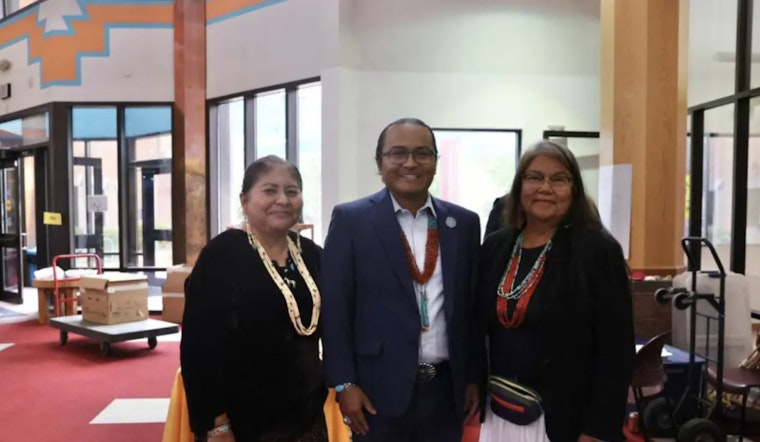
At the Diné Language Teachers Association conference held recently at the Navajo Nation Museum, a critical discussion took place on the hurdles Diné Bizaad teachers face in the confluence of western education standards with their indigenous language revitalization efforts. Amid acknowledging these challenges, the day also recognized their efforts to preserve and promote the Navajo language for new generations.
Geneva Becenti, director of the Diné Language Initiative and Policy Program, is one among those educators who grew up with Navajo as her primary language. For many like her, obtaining necessary credentials poses significant barriers, as they must navigate through a western education system – one that historically aimed to erase their very linguistic identity. "We're saying, 'No, we want to have community speakers come into the schools so they can teach culture with the language,” Becenti told the Office of the President and Vice President of the Navajo Nation. “That’s what the kids want.”
A significant concern surrounds this issue: the National Native American Boarding School Healing Coalition reports that from 1869 to 1960, Native American children were taken from their homes and placed in institutions designed to force assimilation into Western culture, often resulting in traumatic efforts to suppress their native languages. This history continues to have a lasting impact, shaping attitudes toward language and culture among today's Navajo families.
In a significant show of support, Navajo Nation President Buu Nygren declared October 18 as Diné Bizaad Teachers Day. "An act of genocide, an act of assimilation, an act of hate, that's what each Native American child experienced in attending boarding schools back then," President Nygren recounted in an interview with the Office of the President and Vice President of the Navajo Nation. He emphasized his intent to nurture pride and care in the teaching and learning of Diné Bizaad.
Despite the institutional declaration, Diné language teachers face challenges such as salary issues and a lack of respect within the educational system. According to the Office of Diné Standards Curriculum and Assessment Development (ODSCAD), while there is a pathway to certification via a cultural assessment for language teachers, school boards often resist recognizing these qualifications. Becenti pointed out that these teachers "don't have a classroom to teach so they have to pull kids from their classes and then they're not treated as an actual teacher. Just because they don’t have the credentials of a western teacher." This sentiment extends to the financial constraints teachers face, where even allocated funds for Native American education rarely, if ever, trickle down to the language educators themselves, in a statement obtained by the Office of the President and Vice President of the Navajo Nation.
The broader implications of these educational challenges relate to issues of sovereignty and cultural survival. According to Becenti, the Navajo Nation Sovereignty Education Act, intended to affirm the rights of Navajo children to their language and culture within the educational system, appears to be overlooked.





