

























































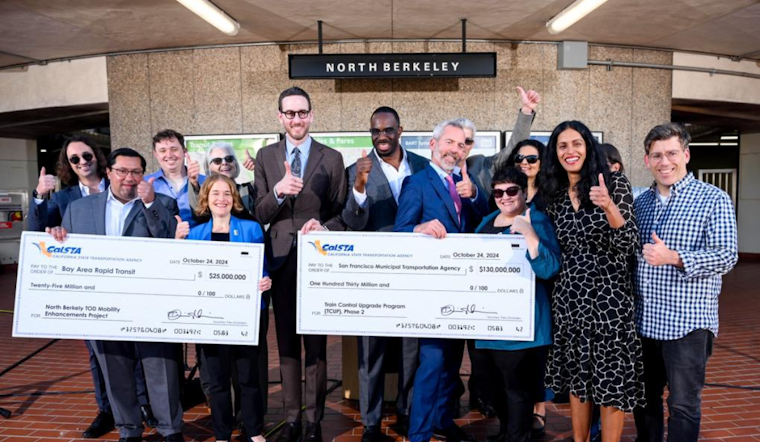
The Bay Area Rapid Transit (BART) system, already an integral part of the Bay Area's approach to transportation, is set to receive a significant boost. A $25 million state grant has been allocated to the North Berkeley BART station for a project that aims to reshape the area into a model of sustainable living. The announcement came from California Secretary of Transportation Toks Omishakin, highlighting the future development plans that include a mixed-use community at the transit hub.
Outlined in the grant details, and as BART Board Director Rebecca Saltzman says in a statement obtained by BART's official site, "This funding makes possible two plazas plus bike and pedestrian improvements,” and is crucial to “transform the North Berkeley BART station area into a mixed-use, sustainable community." The initiative is expected to scale back on the reliance on personal vehicles, focusing on strengthening the ties between public transit and pedestrians. Set within walking distance from the station. The project components are shaping up, including BART rider parking in a new garage and enhancements of the walking and biking infrastructure encircling the hub.
The Transit-Oriented Development (TOD) at North Berkeley is not just about revamping the station with $25 million from the Transit and Intercity Rail Capital Program (TIRCP) but redefining the community. TOD will see the main parking lot of the station reimagined as a residential space and a realm for the public. This mobility enhancement exercise's complete cost is $37 million, covered by a combination of TIRCP funds and local and additional state contributions.
BART's commitment to affordable housing is a foundational element of this transformation, with five residential buildings set to rise in the TOD estate. Representing a phased construction plan, the project aligns itself with BART’s TOD Policy goals and meets the strategic objectives of the TIRCP program. As per BART's projections, the 739 new domiciles designed within the TOD—half of which are tagged as affordable for those earning at or below 80% of the Area Median income—are anticipated to foster roughly 750 new trips daily by 2031.





