

























































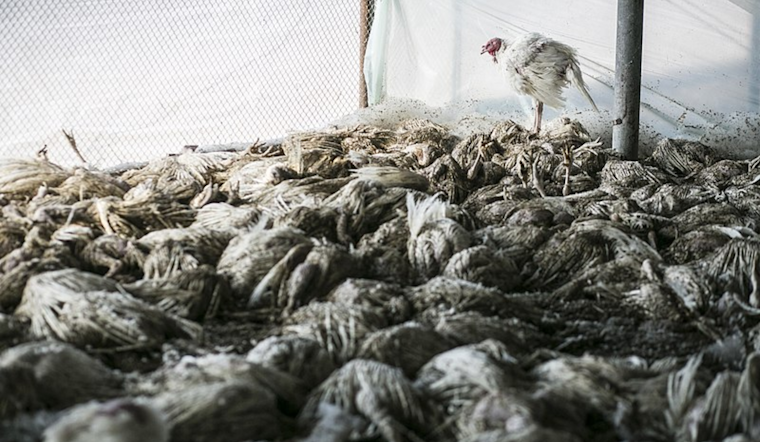
Four agricultural workers in Washington state are the latest to join the unsettling ledger of those tested presumptively positive for avian influenza. A concern not merely for their health but suggestive of a pestilence weaving through our intertwined ecosystems. According to a recent announcement by the Washington State Department of Health. The individuals, exhibiting what has been categorized as mild symptoms, were working at a commercial egg farm that became a ground zero of sorts for an avian flu outbreak resulting in the culling of approximately 800,000 chickens – the necessary response by the Washington State Department of Agriculture to a confirmed contagion apex within the poultry population. Further tests at the Washington State Public Health Lab are in progress while the ominous shadow of this virus extends beyond the perimeters of the farm's fences, alive in the air of Franklin County.
Initial reports held a grimly familiar tune – the Benton-Franklin Health District performed health assessments for those in potential peril, hence discovering this quartet of positive preliminary results, the first whispering warnings of human contraction in the region. These tests are sentries awaiting confirmation by the grander might of the CDC's scrutiny. However, the dance has begun with local authorities distributing personal protective gear and avant-garde defenses as antiviral medication to those exposed. It's a rhythm of preparedness, albeit one we hoped not to replay. The response also includes tight surveillance for any respiratory rebellion among the workers, and interventions are ready alongside vaccines for those symptomatic, ensuring the workforce doesn't become an unwitting host to the viral infiltrator.
With Washington becoming sixth in a chain of states to detect such human infections, the specter of H5N1 has necessitated a vigilance that looms over animal populations and those linked by livelihood or leisure alike, its pathogenetic presence felt from poultry to dairy cattle, to the very wildlife that claims the skies and soils of the Pacific Northwest. "Washington has monitored the spread of H5N1 closely since it was first detected in poultry in the state in 2022, and our state is prepared with the knowledge, relationships, and tools to minimize its impacts on our community," according to the Washington State Department of Health, assured Washington Secretary of Health Dr. Umair Shah in statements echoed across the concerned conduits of public health communication.
Despite the low risk posed to the general public, as posited by the CDC, for individuals whose daily bread is earned in the barns and fields, the stakes are unignorably higher, necessitating a shield of personal protective equipment to stave off the featherborne foe, a subtle yet grave reminder that our health is indeed inseparable from the earth's many inhabitants. In an exercise of caution, the DOH pleads with the public to stand vigilant, to fervently avoid contact with avian cadavers, and to keep pets from engaging in their natural curiosities, for even dead birds can sing songs of sickness. The details of navigating this precarity are available for those seeking refuge in knowledge on the DOH website, a beacon for safety in a storm of uncertainties.





