

























































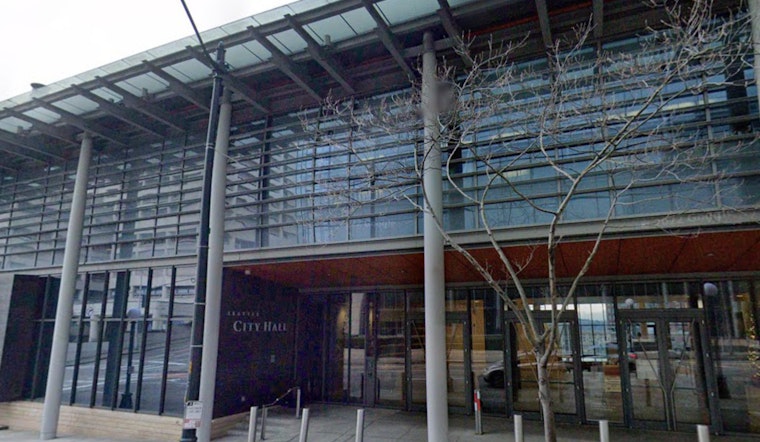
Seattle's approach to public safety is taking a technological turn, with Mayor Bruce Harrell signing off on a new crime prevention pilot that incorporates advanced surveillance and data analysis tools. The legislation, which gained City Council approval, aims to bolster the Seattle Police Department's (SPD) capabilities in high-crime areas, as reported by the Office of the Mayor official website.
In an effort to tackle persistent issues like gun violence, human trafficking, and felony crime, the pilot introduces closed-circuit television (CCTV) cameras in three neighborhoods singled out for their disproportionately high crime rates: Aurora Avenue North, the downtown Third Avenue corridor, and the Chinatown-International District (CID), "We must use every tool at our disposal to strengthen our public safety efforts, take dangerous guns off our streets, and hold offenders accountable," Mayor Harrell said, acknowledging the breadth of the challenge facing the city's diverse communities. According to the Office of the Mayor, these cameras are expected to both deter crime and assist in gathering crucial evidence.
The city isn't merely installing cameras; it's also launching a new real-time crime center (RTCC) designed to feed real-time information directly to responding officers. This includes integration of telecommunications and data streams from various sources, ensuring that law enforcement has access to comprehensive situational intelligence. "Technology is force multiplier at a time when staffing is stretched thin," SPD Interim Chief Sue Rahr told the Office of the Mayor, lauding the initiative for its potential to enhance responsiveness in critical scenarios.
The measures have found strong backing in the City Council, exemplified by Councilmember Bob Kettle who chairs the Public Safety Committee. He celebrated the pilot as a testament to the council's focused commitment to public safety, "The passage is another example of the council’s strategic focus on public safety. I also want to thank Mayor Harrell for exploring these technologies and his support." Councilmember Rob Saka, vice-chair of the Public Safety Committee voiced his support, emphasizing the necessity of such technologies in accelerating investigations and case closures, as noted on the Office of the Mayor official website.
Alongside these tech-based strategies, Seattle's administration is advancing complementary community-centric initiatives such as increased patrols, neighborhood cleanup, and improved lighting. The budget proposal looking forward to 2025-2026 includes $2.4 million earmarked for staffing and operating the Real Time Crime Center in conjunction with the CCTVs, aiming not only for enhanced security but also for the creation of inviting urban environments. Councilmember Tanya Woo highlighted the holistic nature of this approach, "Our communities are diverse, and so are the challenges we face. This pilot program is about using technology to support—not replace—the hard work of those on the front lines," as detailed by the Office of the Mayor.
The legislative moves come on the heels of other tech-forward decisions by the city, such as expanding Automated License Plate Readers (ALPR) to all police vehicles equipped with dashcams, further extending the SPD's toolkit in managing modern urban challenges. These are seen as building blocks in a long-term vision for a safer, more accountable, and community-aligned city infrastructure.



