

























































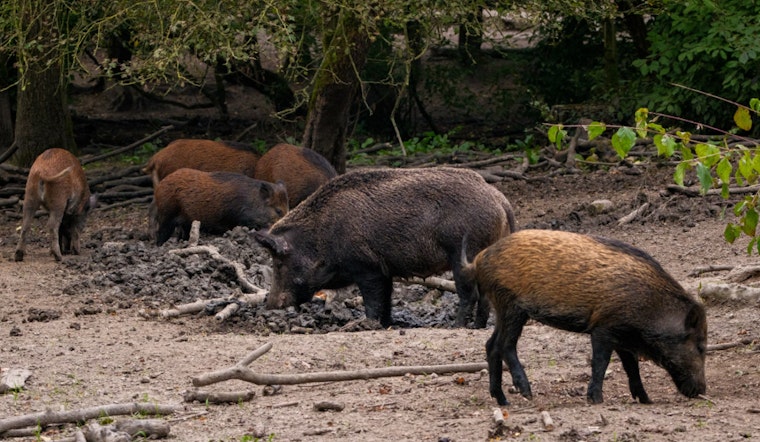
The land sprawls out in Texas, a nation unto itself, where feral hogs, those nonchalant invaders of flora and earth, continue their unchecked drift into farmland and urban centers alike, rooting a path of destruction valued in excess of half a billion dollars annually. Amid the onslaught, a controversial poison known as Kaput has emerged, cleaving farmers and hunters into fractious camps, as reported by the Houston Chronicle and News-Journal.
Despite the poison's affirmation by the Texas Department of Agriculture in February, uptake has been sluggish. Scimetrics Ltd., the makers of Kaput, has seen only 586 certifications for its use thus far. Mark Jones, the sales lead on Kaput, acknowledged a potentially ill-timed launch "We did it in April, so a lot of the crops were in or going in," pointing to an uptick in interest as the season progresses. Yet, the wariness is tissue deep—the image of warfarin, a human blood thinner fatal to hogs at low doses, has seeded doubt among those who fret over the product's safety for non-target species, as detailed by the Houston Chronicle.
The Houston Chronicle outlined that many hunters and trappers see Kaput as an anathema to the ethos of their trade, disputing its ethical implications and warning of dangers to other wildlife. Additionally, some research suggests its effectiveness may come at the price of a lengthy and careful application process – a challenge for farmers accustomed to quicker results. In contrast, as the News-Journal cited, proponents argue that Kaput gives them a mighty arsenal against a seemingly unstoppable swine tide, especially in dense forested areas like East Texas where traditional hunting falters.
A study conducted by Texas A&M AgriLife Extension Service, however, has provided a measure of vindication for Kaput. The research indicated that when used diligently according to guidelines, Kaput proved lethal to the hogs. “If the landowners are diligent and follow the labeling and manufacturer recommendations for the use of product, it will kill pigs,” said Bruce Leland, assistant state director of Texas Wildlife Services, as per the account provided by the Houston Chronicle. Success hinges on a meticulous baiting protocol, one often at odds with the more gun-ho approach that marks the Texan response to the hog problem.
Pockets of success have flickered. For example, Tyler Rich from Pro Chem Sales – a distributor of Kaput – mentioned a customer "who buys a fair amount of the bait right now," who previously could not curb the feral onslaught despite exterminating some 1,200 hogs. These endorsements, though, have to wrestle with the consensus that there is no panacea, no silver bullet – to borrow a favored Texan metaphor – for the wild hog conundrum. The Texas Agriculture Commissioner, Sid Miller has long conveyed the scale of the issue and the insufficiency of any singular approach, even humorously noting the fecundity of the swine, where a joking sentiment hangs heavy with truth, "eight pigs per litter and 10 survive," which he shared with the Houston Chronicle.




