

























































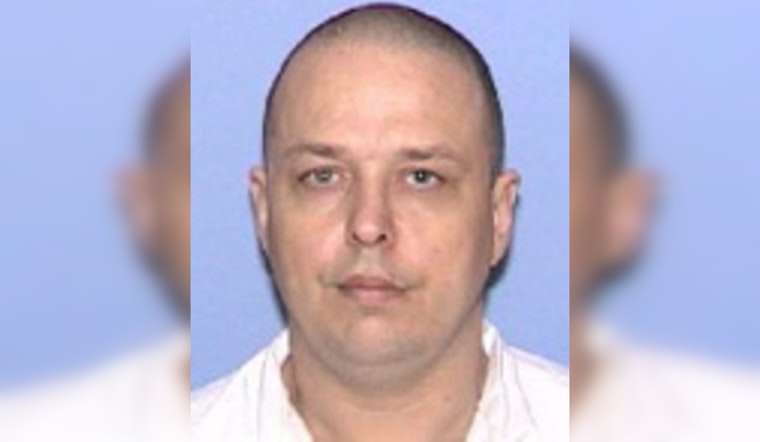
Robert Roberson's fate hangs in intricate balance, with the death row inmate scheduled for an Oct. 21 hearing before the Texas House of Representative’s committee on criminal jurisprudence—just days after his set execution date, as detailed in a KXAN report. Set to bear his testimony, Roberson's appearance at the committee, chaired by Rep. Joe Moody, D-El Paso, seems an anomalous echo of the justice system's complexities. "We will get answers," Moody proclaimed on social media.
Roberson, convicted for the 2002 killing of his two-year-old daughter, has become a concerning symbol of a possibly misapplied 'junk science' law. Proponents argue his daughter’s injuries were misdiagnosed, hinging legal battles on this pivotal claim. Meanwhile, a report from CBS Austin details the Texas Board of Pardons and Parole voting unanimously to deny Roberson's clemency, despite the bipartisan efforts and a widespread campaign to halt his execution. Representatives assert that the evidence presented in Roberson's 2003 trial collides with current scientific consensus, opening a wound in the belief in a fair justice system.
Following the parole board's decision, Roberson's lawyers were quick to file for a stay of execution and a petition for relief with the U.S. Supreme Court. In a display of cold legal continuity, the state's highest criminal court has declined to consider the merits of Roberson's appeal. "It is not shocking that the criminal justice system failed Mr. Roberson so badly. What’s shocking is that, so far, the system has been unable to correct itself," his attorney Gretchen Sween stated, as she and others hope for a potential reprieve from Governor Greg Abbott. The pressure mounts, with a blend of detectives, authors, lawmakers, and even a GOP megadonor rallying behind Roberson's innocence claim, highlighting a deep-seated concern over the finality of a possibly flawed verdict.
The legislative intent behind Texas's 'junk science' law—a doctrine meant to ensure justice for wrongly convicted individuals—has come to a rigorous test. With the Texas House Committee on Criminal Jurisprudence asserting that the law “has been applied in a manner that raises serious constitutional and equitable concerns,” as lawmakers told CBS Austin, Roberson’s case ascends beyond an individual plight. It becomes a critical examination of the state’s regulatory mechanisms, sharply questioning whether a citizen was truly granted the principles of due process within the shadows of the death chamber. Exposure of the case continues, with groups from various disciplines pouring in support for Roberson, as letters and public endorsements all seem to desperately claw against the seemingly unyielding gears of Texas's penal system.



