

























































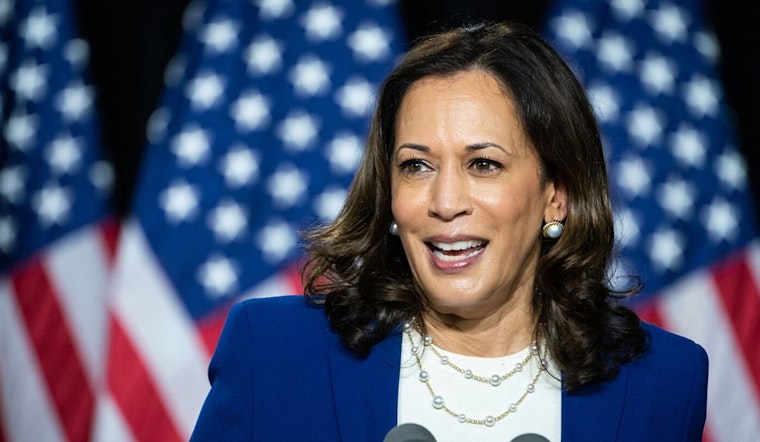
In a strategic move to court moderate and disillusioned Republican voters, Vice President Kamala Harris joined forces with former GOP Congresswoman Liz Cheney for a series of moderated conversations in key battleground regions today. Navigating the terrain of Waukesha County, Wisconsin—a location that has historically leaned Republican—the duo participated in a discussion meant to draw a contrast with former President Donald Trump's controversial presidency.
Their journey, which also touched down in Chester County, Pennsylvania, and Oakland County, Michigan, is part of an amplified effort to win over critical suburban vote blocs in tightly contested states. According to ABC7 Chicago, these counties were previously won by Republican Nikki Haley before she withdrew from the race for the GOP nomination. Their campaign trail mission is clear: sway the uncertain, mobilize the apathetic, and chip away at weakened Trump support.
While specific details of their engagement in Waukesha County were not disclosed, this isn't Harris's first rodeo in Wisconsin. Just last Thursday, she made appearances in Milwaukee, La Crosse, and Green Bay, according to a report by FOX6 Now. Her campaign initiative, clearly focused on this electoral battleground, demonstrates the heightened importance of even a single vote—Wisconsin was a razor-thin victory for President Joe Biden in 2020, decided by a mere 20,000 votes.
At the intersection of Harris's centrist maneuvering and Cheney's reputational rift within their own party, one finds a shared rejection of Trump and his ideology. This partnership is embodied by Cheney’s decision to endorse Harris, driven by her disquiet regarding Trump's actions, particularly his connection to the January 6 Capitol riot. "I do believe that Donald Trump is an unserious man," Harris conveyed in her rallies, as ABC7 Chicago cites.
Further augmenting their bipartisan dialogues, the vice president and the former congresswoman were joined by conservative figures like radio host Charles Sykes and GOP strategist Sarah Longwell—bringing additional conservative perspectives into the mix. This tandem move, as per their earlier campaign endeavors quoted by WISN in Ripon, seems to imprint on once-solid GOP territories a new narrative—one that underscores a deep concern for the preservation of democratic norms and a definitive repudiation of the turmoil linked with Trump's era.





