

























































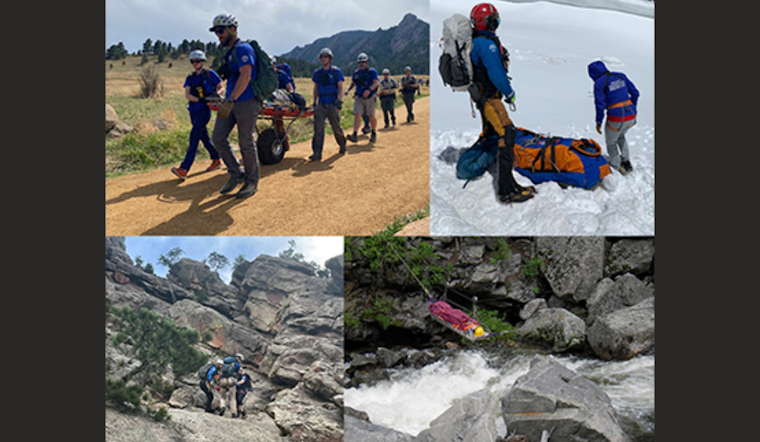
Boulder County's commitment to enhancing local emergency services has resulted in a significant financial boost, as local search and rescue and emergency response agencies are set to receive $721,703 in grant aid. The Boulder County Commissioners have, in conjunction with the support of the Boulder Sheriff, selected eight agencies to benefit from the bounty of the Emergency Services Sales & Use Tax, a provision backed by voters in 2022 through County Issue 1B, according to Boulder County.
The tax revenue is specifically earmarked to bolster organizations that serve the more isolated rural and mountain areas of Boulder County, fulfilling a financial need for services like firefighting and search and rescue, which until now appeared to be underfunded or under-resourced, the spring's round of grants, which sees payments dispatched in the latter half of the year, was dispersed to agencies dedicated both to rescue operations and the improvement of trail security in the county's less urban locales.
An advisory committee, composed of nine Boulder County residents with comprehensive backgrounds in emergency services, firefighting, and search and rescue, recommended the grant awards. This volunteer group stands as a testament to the county's collaborative effort in ensuring that its emergency response capabilities are not just a government mandate but involve local citizens providing their keen insight and first-hand experience.
While the acquisition of grants is often opaque and mired in red tape, Boulder County seems to take a different route, offering transparency in their allocation of funds, funds that are pivotal to not only the immediate, lifesaving work of search and rescue operations but also the preventative measures that come with making rural trails safer for the public to traverse this reiteration of community prioritization, and emergent action is no small feat for the often overlooked rural expanse that depends heavily upon such emergency services.




