

























































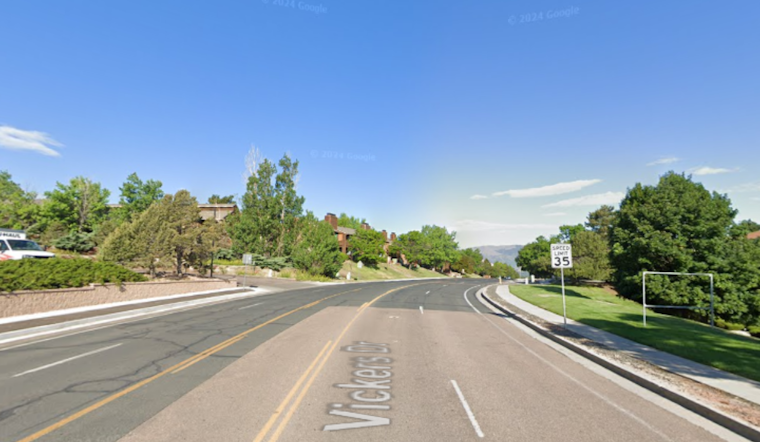
To address long-standing safety and infrastructural concerns, the City of Colorado Springs is set to reconfigure a stretch of Vickers Drive between Academy Boulevard and Union Boulevard. The project, kicking off in early December, will narrow the current four-lane thoroughfare down to a single lane for each direction, while retaining the central turn lane, and enhancing bike lane widths.
The decision comes in the wake of pavement works under the 2C program on Vickers Drive, as stated by City Traffic Engineer Todd Frisbie. Despite the reduction in driving lanes, the lanes themselves will be expanded from the current 10 feet to a standard 11 feet width. The adjustments aim to align with City standards but have inadvertently led to concerns about potential increased traffic, though these are largely unwarranted according to city projections.
Frisbie points out the necessity of the change, clarifying that the current lane sizes fall short of City standards. "The driving lanes will increase from 10 feet wide to 11 feet wide to meet City standards," said Frisbie, according to the City of Colorado Springs. The project also extends to improve the substandard bike lanes, broadening them to the city standard of six feet for on-street bike paths.
Another critical aspect driving the reconfiguration is the apparent connection between the current lane structure and an alarming rate of high-speed collisions and accidents, including 28 broadside crashes and a trio of bicycle crashes over the past decade alone. "National research and the City’s experience show that lane reconfigurations of this type are a proven safety tactic that can reduce these accidents by 30-50%," Frisbie said, as per City of Colorado Springs. While implementing safety measures, the project also includes a buffer to ensure a safe distance between vehicular traffic and cyclists.
As reported by the City of Colorado Springs, Vickers Drive functions as a key component within the City’s on-street bike system, offering east-west connectivity between Austin Bluffs Parkway and Academy Boulevard. Traffic impacts are projected to be minimal, with Frisbie noting, "Our data shows that travel times will only see an increase of about 10 seconds." The lane reconfiguration is poised to safeguard not only drivers but also cyclists traversing one of the city's significant arterial routes.





