

























































A corrections officer from Gaithersburg, MD, has been caught up in the webs of justice alongside inmates and external accomplices. The recent unsealing of an indictment has unveiled a conspiracy where contraband items, which included a knife, drugs, and cell phones, were intended for inmates awaiting trial for serious charges like murder and armed assault at the D.C. Jail. This revelation was shared by U.S. Attorney Matthew M. Graves and other law enforcement officials in a statement released by the Department of Justice.
The indictment names Rashaad Roper, aged 45, alongside two women, LaTara Brown, 31, and Kiya Holland, 33, who were apprehended on November 19 as part of the scheme. Roper, Brown, Holland, and their co-defendants—Darius Robertson, Marcel Vines, and Stefon Freshley—are all facing charges of providing or possessing contraband in a prison and conspiring to commit those acts. According to U.S. Attorney's Office, District of Columbia, instances of the conspiracy were captured when Department of Corrections Office of Investigative Services intercepted contraband twice, once in February and again in July, recovering numerous illicit items from a sweep of the housing unit where the involved inmates were held.
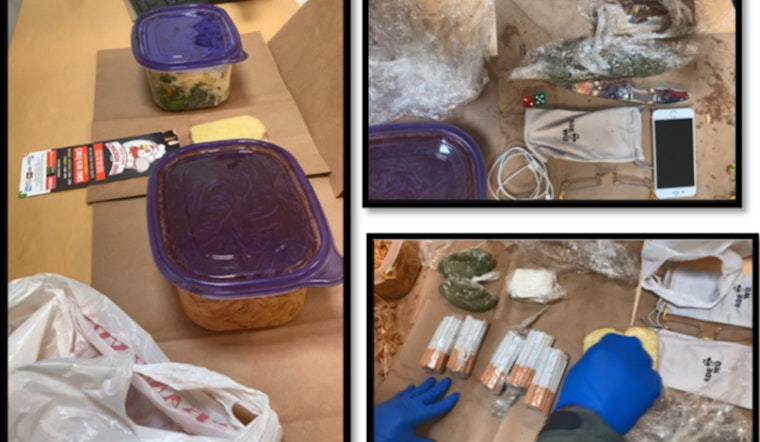
Allegedly, Holland and Brown repackaged illegal items into innocuous-looking Tupperware containers, cleverly concealed within prepared food, all wrapped up in saran. These containers were then brought to the D.C. Jail, where either Roper or another corrections officer, referred to as "Co-Conspirator 1" in the documents, would smuggle the items inside. The items were then destined to be delivered to Robertson, Vines, and Freshley, all inmates awaiting trial for violent crimes.
The distribution of such contraband within the confines of a correctional institution corrodes the very foundations of an already troubled system. The Interior investigation by the Department of Corrections Office of Investigative Services about the recovered items paints a harrowing picture: a switchblade, phones, drugs, and more, hidden within everyday objects like eyeglasses and rolling papers. The July raid alone turned up a cachet of hundreds of pills, dozens of contraband cigarettes, and additional cellular phones, evidencing the scale of this operation.
If the accused are found guilty, the charges they're facing carry significant weight – up to a statutory maximum sentence of 20 years for providing or possessing contraband in prison, with the conspiracy charge adding potentially five more years. Sentencing will ultimately fall in the hands of a U.S. District court judge, who will deliberate within the framework of federal sentencing guidelines and other statutory factors. While the indictment lays out the allegations, it must be remembered that all individuals are deemed innocent until proven guilty beyond a reasonable doubt in a court of law, as noted by the prosecuting office.





