

























































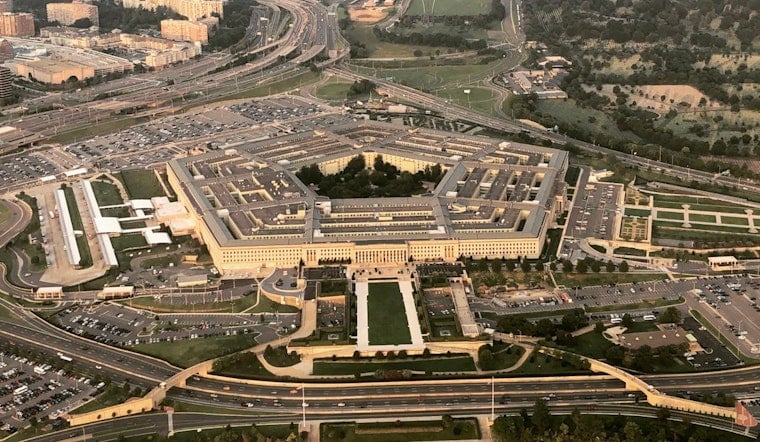
Thirty of the country's biggest research universities have been given just two weeks to scour their books for risky foreign partnerships, under a Pentagon order that threatens to cut off federal research money for any school that doesn't comply by August 31. The list includes household names like Harvard, MIT and Johns Hopkins, alongside UC Berkeley, UCLA, UC San Diego, UT Austin, NYU, Cornell, Duke, Penn State, Georgetown, Virginia Tech, Emory and UNC Chapel Hill.
That comprehensive roster was obtained by DefenseScoop, since the Pentagon's own announcement did not publicly name the 30 targeted schools. Per Military Times, the universities must complete internal audits, assess their exposure to export-controlled research, and terminate any problematic foreign arrangements within two weeks or face immediate disqualification from future federal research grants. As reported by CW39 Houston, the Department of Defense ordered the 30 schools to review partnerships with mostly Chinese universities and military training institutions, and an anonymous U.S. official confirmed that Harvard, MIT and Johns Hopkins are among the universities named.
Emil Michael, the Pentagon's chief technology officer, framed the crackdown in stark terms, saying the Department of War has zero tolerance for academic partnerships that compromise national security, according to the Associated Press report carried by CW39 Houston. The Pentagon has said the audit is meant to protect taxpayer-funded research from theft and exploitation. None of the named universities immediately responded to Associated Press requests for comment.
The Legal Trigger Behind the Two-Week Ultimatum
The audit's legal foundation traces back to Section 1286 of the Fiscal Year 2019 National Defense Authorization Act, which bars the Department of Defense, starting in Fiscal Year 2026, from spending federal funds on fundamental research involving collaboration with or equipment from any foreign entity on its risk list, according to the U.S. Department of War. Congress enacted the provision to keep foreign adversaries from leveraging open academic research for military technological gains.
In July, the Pentagon updated that risk list to include 130 academic and research institutions across China, Russia and Iran. The University of Science and Technology of China and the Academy of Military Medical Sciences both appeared on the updated list, per CW39 Houston's reporting, joining other prominent additions such as Fudan University, Shanghai Jiao Tong University, Xidian University and several institutes under the Chinese Academy of Sciences, the Department of War said. The list also included several Iranian and Russian institutions, and Iran International reports the watchlist specifically targets Sharif University of Technology, Shahid Sattari Air Force University, the Kurchatov Institute and MIREA - Russian Technological University.
Confucius Institutes and the Money Trail
The audit also directs universities to review ties to organizations associated with what regulators call rebranded Confucius Institutes, following earlier federal restrictions that shut down more than 100 Chinese government-funded language and cultural programs on U.S. campuses, according to Export Compliance Daily. Many of those programs simply changed names or restructured their operations after Congress banned their funding in earlier years.
The financial stakes are considerable. The Defense Department provided $9.05 billion in academic research and development funding in Fiscal Year 2023, more than 15% of all federal higher education R&D obligations, according to National Science Foundation survey data, out of more than $117 billion in total U.S. higher education R&D spending that year. Separately, universities disclosed over 8,300 foreign gift and contract transactions worth more than $5.2 billion in 2025 alone under Section 117 of the Higher Education Act, which requires federally funded schools to report foreign gifts and contracts of $250,000 or more, per the U.S. Department of Education. Title VI of the CHIPS and Science Act of 2022 adds another layer, barring federal research awards for anyone participating in Malign Foreign Talent Recruitment Programs run by China, Russia, Iran or North Korea, according to the National Science Foundation.
Universities Push Back on the Presumption of Guilt
Sarah Spreitzer, vice president at the American Council on Education, which represents college and university presidents, said her organization has partnered with the federal government on national security concerns and even helped develop the first version of the foreign-institutions list during President Trump's first term. Even so, she raised concerns that the announcement suggests without evidence that the schools are engaged in wrongdoing, and she worries that U.S. schools will be held liable for partnerships that predate the list, according to the Associated Press account. Spreitzer noted that American Council on Education member institutions have moved away from research partnerships with listed institutions in the years since the list was created.
The Chinese embassy called the academic exchanges normal scientific, educational and academic exchanges and said it opposes the politicization of those partnerships, per the same Associated Press report. The audit lands amid a broader Trump administration posture toward China, which has pushed back on Belt and Road infrastructure projects in the Americas, Chinese ownership of ports at either end of the Panama Canal, and Chinese telecommunications-sector investment, expressing deep concern about China's activities in the Americas.
Part of a Wider Pentagon Campaign on Campus
The audit follows a string of Defense Department actions under Defense Secretary Pete Hegseth earlier this year, including flagging Carnegie Mellon over active-duty military tuition reimbursements and restricting research ties at William & Mary. Separately, the Justice Department is investigating whether Harvard allows Chinese donors to create scholarships that exclude American students, an inquiry that runs alongside Hoodline's earlier reporting on the William & Mary scholarship probe and Hoodline's coverage of the Pentagon's financial pressure on Harvard back in February.
Taken together, the moves reflect a pattern in which federal research funding is increasingly conditioned on strict alignment with security and governance standards set by the Department of War. With the August 31 deadline bearing down, research administrators at 30 of the nation's most prominent universities now have to decide, in a matter of days, which international partnerships are worth defending and which ones are too risky to keep.



