

























































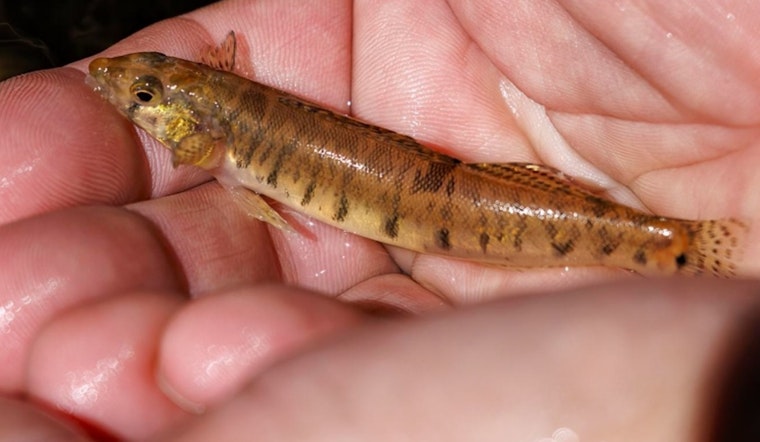
The North Carolina Wildlife Resources Commission (NCWRC) and the Division of Parks and Recreation have partnered to reintroduce the endangered Roanoke logperch at Mayo River State Park. In early November, fingerling logperch, a species native to North Carolina and Virginia and federally endangered since 1989, were released, according to the North Carolina Department of Natural and Cultural Resources.
An agreement signed in October, building on a 2022 arrangement with the U.S. Fish and Wildlife Service (USFWS), granted NCWRC and USFWS access to conserve priority aquatic species, including the Roanoke logperch, across 18 miles of the state park's habitat. The logperch was first reintroduced to these waters last year in an effort upstream of the Washington Mill dam, a joint project with the Piedmont Land Conservancy. However, dam structures and water quality issues initially contributed to the species' decline.
Rachael Hoch, Assistant Chief of Inland Fisheries at NCWRC, expressed excitement about the collaboration, saying, "The N.C. Wildlife Resources Commission is excited to partner with the N.C. Division of Parks and Recreation to reintroduce the Roanoke logperch." She credited the USFWS permit for enabling partnerships with non-federal land stakeholders, as mentioned by the North Carolina Department of Natural and Cultural Resources.
Kathy Capps, Deputy Director of Operations at State Parks, highlighted the Mayo River's rich wildlife habitat and the role of state parks as wildlife preserves, crediting the North Carolina Department of Natural and Cultural Resources for enabling this conservation partnership. TR Russ, Foothills Aquatic Wildlife Diversity Coordinator, supported the reintroduction, stating, "The Dan River Basin is one of the most diverse places in the state for aquatic species," noting the benefits of the species' return, particularly above the Avalon Dam, according to the North Carolina Department of Natural and Cultural Resources.
With a lifespan of about 6.5 years and the nickname "king of the darters," the Roanoke logperch's revival reflects the balance between natural heritage and human stewardship. State Parks Natural Regional Biologist Manager Jimmy Dodson emphasized this, stating, "While most people recognize parks as places of recreation, they are first and foremost home to the flora and fauna of North Carolina. We want to emphasize to our visitors that this species is protected and should not be collected without appropriate permissions," as per the North Carolina Department of Natural and Cultural Resources.





