

























































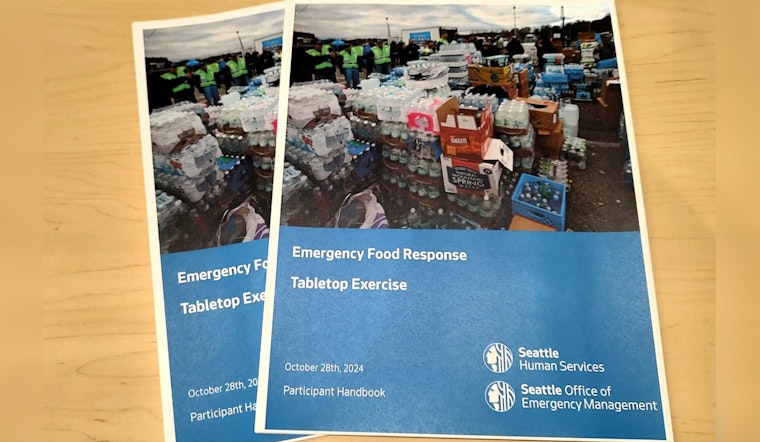
Seattle is taking steps to prepare for emergencies, focusing on food supply after disasters. Last month, the Seattle Human Services Department held a full-scale exercise to simulate how the city’s food assistance network would respond in a crisis, such as an earthquake. The drill aimed to improve readiness for real-world emergencies.
Facilitating the tabletop exercise were Jill Watson and Seán Walsh of the HSD, alongside Jordan Bright from the Office of Emergency Management (OEM). Their scenario depicted an all too real possibility – an earthquake off the coast wreaking havoc on the city's infrastructure, leading to significant challenges in providing necessities such as food. The table was set with 40 experts from varying fields, including public health, emergency management, and food system experts engaging in collaborative discussions. They collectively navigated potential hiccups, such as supply chain disruptions and ensuring the continuity of food programs already in place, which could severely impact food access post-disaster, according to a statement obtained by Seattle's HSD blog.
This proactive approach isn't entirely new. Seattle's efforts to mitigate food insecurity amidst the crisis have a backstory, particularly given the region's previous encounters with other emergencies. Experiences from the COVID-19 pandemic were a focal point during the drill discussion, as past collaborative efforts between agencies proved invaluable in reaching out to vulnerable communities.
Yet, the breakout sessions were instrumental in promoting strategic thinking among participants, from redesigning the delivery of supplies to exploring the logistics of how organizations can maintain their operations during emergencies. The proactive scenario allowed experts to consider the grim realities of damaged stores, empty food banks, and the complexity of food distribution with compromised transportation systems. "It was inspiring to see all the key stakeholders gathered together, motivated to collaborate and support our community in the event of an emergency," stated Yamila Sterling, Food Access & Education Director at Solid Ground Washington, according to the Seattle's HSD blog.





