

























































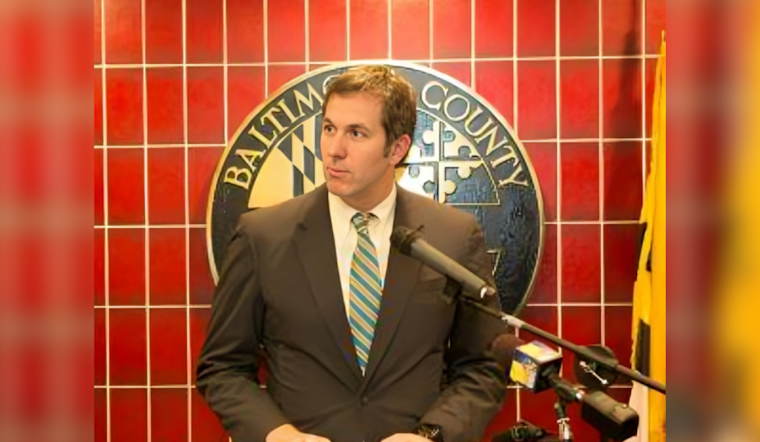
To combat the housing affordability crisis in Baltimore County, County Executive Johnny Olszewski took a decisive step by issuing an executive order requiring new housing developments that benefit from County financial support to include affordable housing units. This mandate applies to a slew of financial incentives such as loans, grants, and tax credits offered by the County, which developers will now have to consider seriously if they aim to tap into these funds for their projects. According to the executive order, developments must allocate 20 percent of units to be affordable, with half intended for households earning at or below 60 percent of the Area Median Income and the other half for those under 80 percent.
According to a Baltimore County press release, in his statement, Executive Olszewski made his intent clear, "Access to high quality, affordable housing should be a fundamental right," and leaders must act to foster "attainable housing opportunities that allow residents to put down roots and join vibrant neighborhoods," this initiative is seen as a continuation of Baltimore County's mixed-income housing strategy designed to fulfill both moral and legal obligations to accommodate families across the income spectrum.
Brian McLaughlin, once Maryland’s Assistant Secretary for Neighborhood Revitalization and the inaugural CEO of Enterprise Community Development, championed the housing directive as a step towards a more comprehensive public/private partnership. "Good housing matters," McLaughlin emphasized, as per the county's press release, asserting the importance of decent housing at all life stages. He applauded the County for requiring those who utilize public funds to be agents of innovation and progress for the entire community.
With a commitment under the 2016 Conciliation Agreement with HUD to create 1,000 affordable rental units by March 2028 and 908 already approved, Baltimore County’s recent executive order represents another stride towards this goal. The Olszewski administration has shown sustained effort in improving the region’s housing landscape, exemplified by the passage of critical housing legislation, the deployment of Master Plan 2030, and the launch of a public-facing vacant property portal that lists over 500 empty properties aiming to guide developers towards turning vacancies into opportunities for creating new housing.





