

























































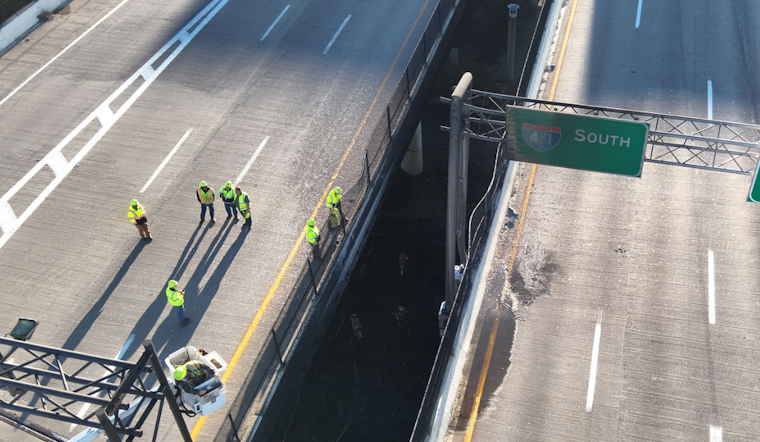
The crucial link between Cincinnati, Ohio, and Newport, Kentucky, the Daniel Carter Beard Bridge, sits eerily inactive above the Ohio River as a fire that arose from beneath cripples its southern artery, Interstate 471. In the early hours of November 1, the Cincinnati Fire Department was summoned to a conflagration that devoured a playground at Sawyer Point Park, nestled right beneath the bridge's broad shoulders, the smoke and flames once a beacon in the night, now merely a specter of disruption, according to a release from the Ohio Department of Transportation.
While the fire's intent and origin remain mysterious, the city's day-to-day workings are in a dance of diversion and detour. The southbound direction of I-471 continues to see its gates shuttered north of the river's embrace. Traffic flow has been rerouted to the veins of I-71 and I-75 South. The pulse of semi trucks is now guided to the arterial bypass of I-275, circling the city's edge to eschew further delays. At the same time, those operators bearing hazardous materials have been directed to commit to this outer belt path, as stated in a notice from the Ohio Department of Transportation.
Indeed, downtown Cincinnati now finds itself swathed in additional restrictions, with Liberty Street barred access to I-471, the 5th Street ramp also closed. Although U.S. 50 keeps its throat open through traffic, its access points to I-471 have been sealed. For those who frequent Sawyer Park, their patterns of meanderings and recreation must now be recalibrated, with current details available thanks to updates from Cincinnati Parks, which can be found on their website.
As the Cincinnati Fire Department continues to sift through the ashes for answers, the bridge's structural integrity awaits its verdict. The 147-page shop drawings for girders, a cartographic detailing of each component's creation, were received just this past Friday; the Ohio Department of Transportation's squadron of experts gave up the weekend, sifting through the labyrinthine documents to ensure approval was met by the subsequent Monday, indicating a commitment to mend the breakage, restore the flow, and stitch closed the wounds of unplanned stasis that now afflict the region's transportation grid, as outlined in the department's recent press release.




