

























































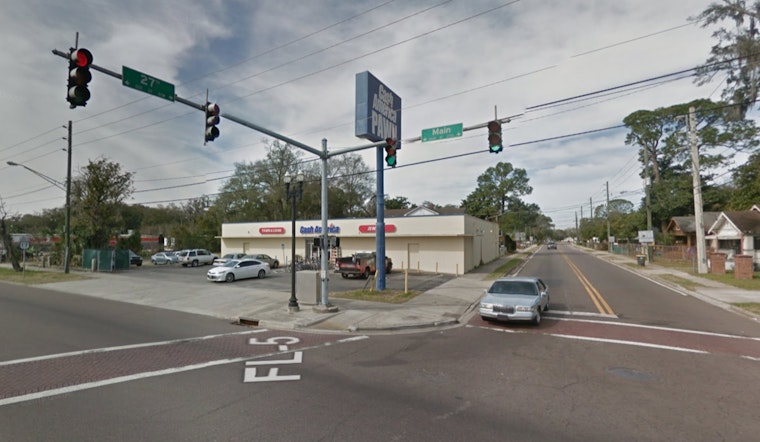
In an incident that underscores the often precarious dance of routine law enforcement procedures and individual rights, Jason Arrington was shot in the upper thigh with his own weapon during a traffic stop conducted by the Jacksonville Sheriff's Office earlier this month. According to a statement obtained by Action News Jax, the gun discharged as a JSO officer was attempting to remove it from Arrington's holster, an action that unfolded rapidly after Arrington had been cooperative during the incident.
Pulled over for running a red light, as reported by First Coast News, Arrington informed the officer of his weapon. While the officer tried to remove the gun, which JSO confirmed was legally owned and carried by Arrington in a holster, it accidentally fired. Struck by the bullet, Arrington described his injuries as considerably affecting his job performance as a crane operator, saying "It damaged me pretty good." Jason Arrington told First Coast News that despite his hands being on his truck, so officers didn't think he was attempting to use the weapon, he ended up "losing a lot of blood quickly."
The aftermath of the shooting has led to legal consequences for the involved parties. Kay Harper Williams, Arrington's attorney, communicated their intent to pursue a civil rights lawsuit against the JSO, claiming that Arrington's rights were violated during the incident. Citing the officer's lack of proper training in the handling of such situations, Williams demanded the release of the bodycam footage, in absence of which the officer in question has since been relegated to administrative duty pending the outcome of an internal affairs investigation, as per a social media post by Jacksonville Sheriff's Office.
In light of the ongoing internal affairs investigation and subsequent litigation, JSO has declined to offer more comprehensive commentaries. However, they have disseminated guidelines reinforcing how officers should conduct traffic stops and pat-down searches, especially when a firearm is involved. These guidelines suggest officers take into account various factors that might hint at the concealed weapon carrier's intent or legality of possession. This comes after a JSO memo stated that unless there is articulable suspicion, officers should not seize firearms from individuals legally carrying them, pointing toward a nuanced approach to weapon handling during such encounters.




