

























































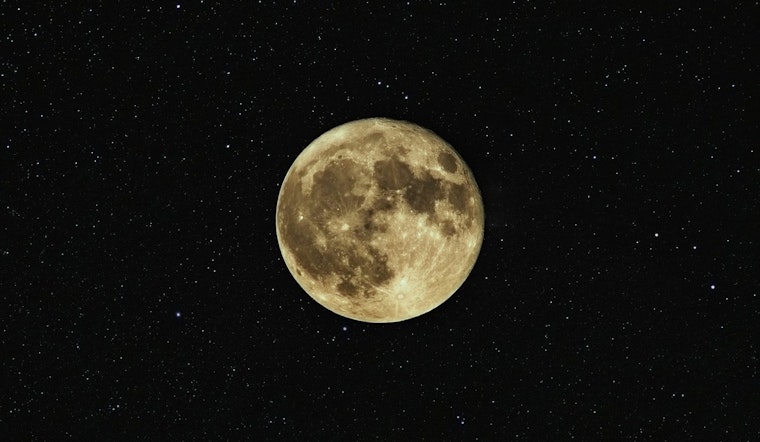
New Yorkers can ring in 2025 by simply looking up to witness a cosmic display featuring one of the year's briefest meteor showers and a showcase of planets at their shining best. As the Gothamist reports, the Quadrantid meteor shower will grace the sky for the first five days of January, with an expected peak of up to 40 shooting stars per hour. Yet, not only shooting stars but also planets like Mars, Venus, and Saturn will be visible to those willing to brave the winter chill.
January offers a stellar lineup for astronomy enthusiasts eager to spot celestial wonders. Starting with Mars, which will appear bigger and brighter than at any other time of the year on January 13 when an occultation with the moon makes it momentarily disappear from sight. Frank Bifulco, a board member of the Rockland Astronomy Club, acknowledged the clear winter skies but noted the trade-off is the cold weather, as quoted by the Gothamist. Star clusters like the Beehive, Pleiades, and Hyades will also be present, adding to the skywatching delights throughout the month.
Apart from Mars, Venus will not disappoint with its brilliance. According to Space.com, the hottest planet in our solar system will be one of the brightest objects in the night sky, especially visible in the evenings from March 1 to March 14 when it will be at its brightest. Saturn's elegance, although of moderate brightness, can also be appreciated, specifically when it reaches opposition and shines the brightest from September 14 to 25.
For those seeking guidance on the ideal moments for planetary observation, be sure to refer to telescope and astrophotography product guides, as touched upon in Space.com. As Kat Troche, NASA's solar system ambassador, mentioned in an interview with the Gothamist, these celestial events offer a super-bright view of our universe's vastness. Enthusiasts shouldn't miss the Amateur Astronomers Association's January 7 sidewalk event featuring telescopes in Brooklyn for those eager to take a closer look at these distant worlds.
While the stars and planets promise dazzling spectacles for those who look upwards, it's the dance of planets like Mercury, observed in separate intervals across the year, and the grandeur of Jupiter visible from December 26 to 31 that will extend these opportunities for urban astronomers well beyond January's celestial events.





