

























































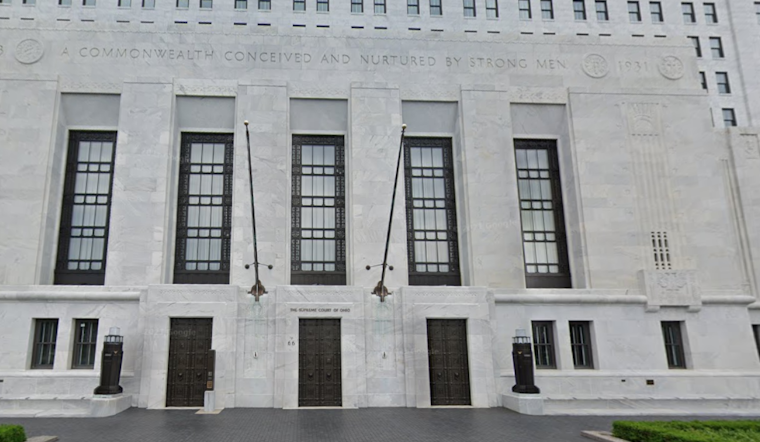
As reported by Court News Ohio, the Supreme Court of Ohio has overturned a 1999 precedent allowing lawsuits without a personal injury. The decision reaffirms individuals' need to demonstrate an actual injury to file a lawsuit.
Based on his position as a taxpayer, Martens's claim invoked the public-right doctrine. However, as Justice R. Patrick DeWine wrote, this has departed from the longstanding standing requirement. DeWine expressed that the precedent was erroneous: "It was wrong when it was decided and remains wrong today." The ruling explicitly overruled the prior decision and emphasized that Martens could not rely on its exception to the requirement for standing, as Court News Ohio detailed.
The court's analysis highlighted the specificity of judicial power, which mandates the resolution of actual controversies between legitimately affected parties. As Martens did not experience direct injury from the actions of the local judges, his standing through the public-right doctrine was questioned. This doctrine, previously established in State ex rel. Ohio Academy of Trial Lawyers v. Sheward has now been critiqued for its vague application and potential abuse of judicial power.
While a majority concurred with the decision, Justice Jennifer Brunner presented a concurring opinion, querying the appropriateness of using the case to abolish public-right standing given the case's briefing and the defendants' absence of a request to overrule Sheward. "The majority opinion comes across as sneaky and constrained," Brunner stated, per Court News Ohio, suggesting that the matter should be reserved for a more suitably debated case.
According to Court News Ohio, contrary to the main opinion, which suggests an end to the public-right doctrine, Brunner's perspective reflects that the discussion on Sheward is "woefully deficient – to the point of being affirmatively misleading." The public-right doctrine has been limited in its application since its introduction, with the Court refraining from granting such standing since 2002.
The Court ultimately upheld the Third District's ruling that Martens failed to meet the requirements for bringing a taxpayer lawsuit. Despite Martens' argument on the illegal expenditure of taxpayer funds, the Court clarified that he had not demonstrated statutory authorization or a special interest in the allegedly misused court funds.




