

























































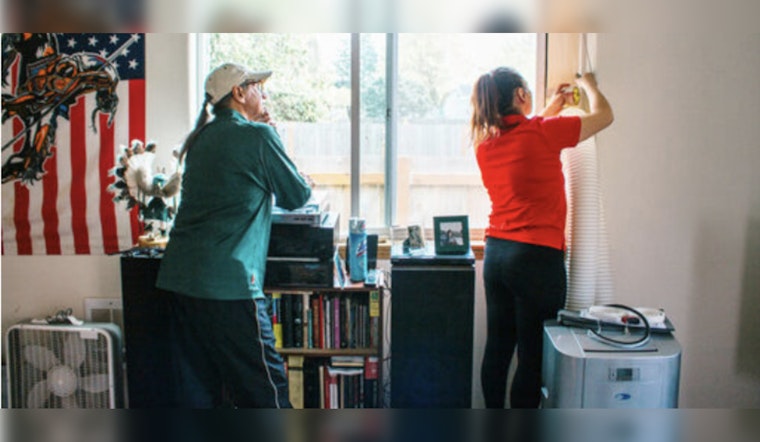
Portland's battle against extreme heat is heating up with the city council's recent decision to inject an additional $10.3 million into the Cooling Portland program. The Portland Clean Energy Community Benefits Fund (PCEF) is funding this expansion, which aims to provide 10,000 more households with free portable heat pump cooling units by 2026, according to the program's announcement.
Acknowledging the urgent need highlighted by the devastating 2021 heatwave, which claimed over 69 lives in Multnomah County, Cooling Portland has been proactive in outfitting homes with dual-use heat pump units. These not only cool spaces in the summer but also provide warmth when the temperature drops. Until now, the program was set to install 15,000 units over five years, but a record-breaking 6,000 units have already been put in place this year, "for a total of 13,169 in just three years," Pilar Calderin, Climate Justice Program Manager at Earth Advantage, said in a statement obtained by Portland's official news release. An additional 6,000 residents are queued up, eagerly awaiting their turn, reflective of a demand that outstrips the original resource allocation.
To facilitate ease of access to the program, residents need only to dial 3-1-1. PDX 311 Program Manager Michelle Kunec-North praised the accessibility of this resource: “With just a call to 3-1-1, community members can quickly connect to a wide variety of information and services from their local government," she told the City of Portland. The program's reach is inclusively extended to ensure that residents with diverse language and capability barriers can also make use of the Cooling Portland program among other services.
Intentionality marks the initiative's execution. A county analysis found that the primary victims of extreme heat were individuals who were over 60, lived alone, or had health conditions heightening their vulnerability to high temperatures. To that end, PCEF has designed the program to prioritize these at-risk groups. Families earning 60% or less than area's median income—about $71,000 annually for a family of four, or $50,000 for an individual—are eligible, with precedence given to those with specific vulnerabilities. Applying is a mere phone call or online form away, a process that also provides connections with utility programs for managing electricity, gas, and water expenses.
Since its inception in 2018 via a voter-backed tax on large retailers, the clean energy fund was established to pursue climate action that would uplift all of Portland's residents but especially those from communities of color and low-income backgrounds. The fund's intention is clear: it's not just about installing hardware but addressing the underlying inequities that exacerbate the climate crisis's toll on the marginalized. "By acting now, the City will be able to leverage the valuable community partnerships and capacity for installations over the next two years," Jaimes Valdez, PCEF Strategic Partnerships and Policy Manager, expressed in the program's announcement.


