

























































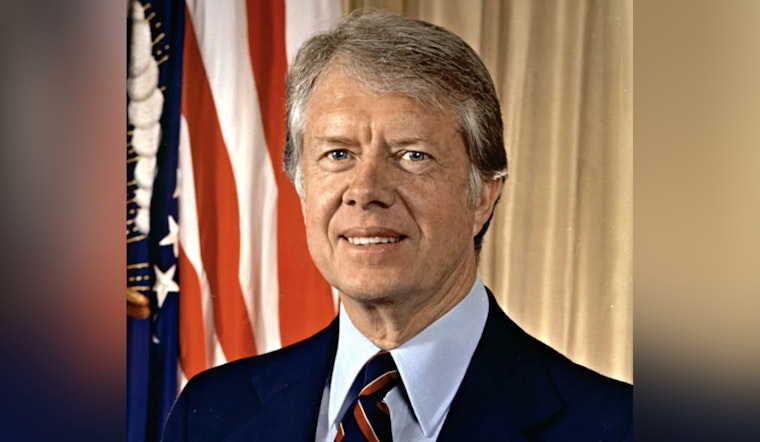
The recent passing of former President Jimmy Carter has stoked reflection on a distinguished legacy that spans the realms of politics and public service. In one notable act during his presidency, Carter signed legislation in 1978 that established the San Antonio Missions National Historical Park, a decision that carries enduring significance in both San Antonio's heritage and the national narrative.
While the conservation of the Missions might seem like a unifying endeavor, it was fraught with controversy over potential infringement on the separation of church and state, particularly given the active Catholic churches within. Former Congressman Charlie Gonzalez, echoing his father and then Congressman Henry B. Gonzalez's views, told TPR, "My recollection of my father's relationship with Jimmy Carter was one of profound admiration for the character of President Carter and, of course, his agenda. I think they were kind of kindred spirits." The duo, alongside Congressman Abraham “Chick” Kazen, navigated the stormy waters to safeguard the missions' status, both as historic landmarks and places of worship.
These historic landmarks now stand not merely as testaments to San Antonio's past but as UNESCO World Heritage Sites, weaving a narrative of multicultural legacy intrinsic to American history. As detailed in the TPR article, the chapters of indigenous peoples, Spanish missionaries, and settlers are indelibly inscribed into the Missions' stone. Gonzalez reflected on the momentous nature of the act, "Exceedingly big deal, and I like to think that may be the intervention of my father and Congressman Kazen and the cooperation of the administration — President Carter — who had a good relationship with dad, and dad really did admire him."
President Carter’s multi-faceted legacy was defined by his dedication to humanistic values fused with a scientific approach to problem-solving. As an engineer and a political figure, he laid foundations that would persist beyond his own years. Boston University political historian Thomas Whalen admired Carter's grounding in science and rationality, saying in an interview with MSN, "He believed in science, he believed in rationality, and he believed that if you give people a chance, they will do the right thing." Carter, who passed away at the age of 100, extended himself in fields as diverse as education reform, the Iran hostage crisis resolution, and fostering diplomatic ties with China, honoring commitments with an engineer’s precision veiled behind political savvy.
As the nation honors Carter's 100 years of life and his lasting impact on the U.S., people are invited to share their personal memories. A virtual condolence card has been created to collect reflections and admiration from those he touched, keeping his legacy of compassion and hard work alive.





