

























































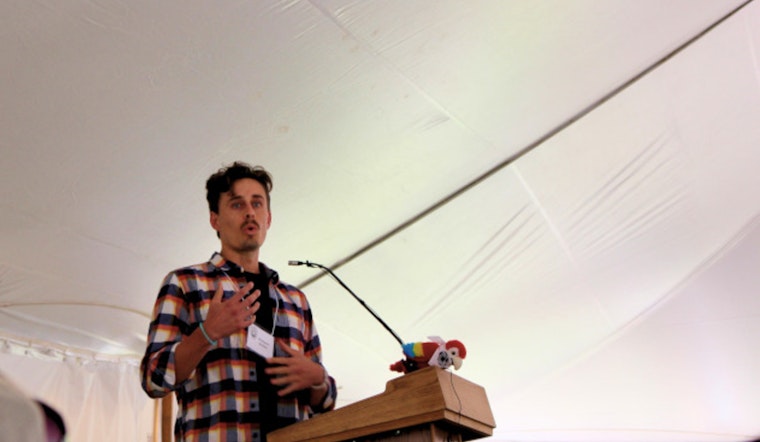
The S'edav Va'aki Museum has officially announced that S'edav Va'aki Museum has officially announced Dr. Christopher W. Schwartz, an esteemed specialist in North American archaeology, will step on as the City of Phoenix Archaeologist starting December 9 of this year, the gears of history and curation ostensibly shifting on schedule, as detailed by the City of Phoenix in a press release from the museum on Friday.
Dr. Schwartz, already a fixture in Arizona's academic and archaeological landscape since his move from sunny Rancho Palos Verdes, California in 2001, is no stranger to the field with degrees in Anthropology that scale the educational spectrum from B.S. to Ph.D., his scholarly zeal rooted deeply in the soils of Arizona State University, and his professional accomplishments including a postdoctoral research tenure at the same institution plus a lecturer role at Northern Arizona University, he has crisscrossed academic and practical arenas with the grace of a seasoned professional.
Known for his authoritative work on pre-Hispanic social dynamics and human-animal relationships, Schwartz basks in the recognition from notable bodies such as the National Science Foundation and the National Endowment for the Humanities, as evidenced by his funding successes, and he wears his specialist hat in zooarchaeology, geographical information systems, and isotopic systems, claiming a pioneering place in the archaeological study of avian influence in ancient societies through his co-edited volume, "Birds of the Sun: Macaws and People in the Pre-Hispanic U.S. Southwest and Mexican Northwest," as per the City of Phoenix.
The Phoenix archaeological community eagerly anticipates Dr. Schwartz's strategic direction after his recent stint helming a multi-million dollar cultural resources department, where Schwartz managed no less than $3 million in cultural resources projects and a cadre of 14 archaeologists and specialists and, together with his crew, Schwartz navigated the meticulous world of field operations, compliance reports, and team development, their findings and methodologies no doubt integral in the preservation and understanding of Arizona's rich cultural tapestry.
When not surrounded by artifacts and excavation sites, Schwartz can be found investing time in seemingly mundane but perhaps equally rewarding pastimes like playing soccer, hitting the hiking trails, or diving into a good book over a steamy cup of coffee – suggesting perhaps that balance is key, even for full-throttle academics with an insatiable appetite for the ancient world.
With such a loaded resume and the spark of ambition still evident in his professional undertakings, Dr. Schwartz's advent as City Archaeologist is sure to herald a new chapter in Phoenix's relationship with its past, and the S'edav Va'aki Museum is clearly betting on his expertise to serve as a lighthouse illuminating the depths of the city's ancient stories and relics.





