

























































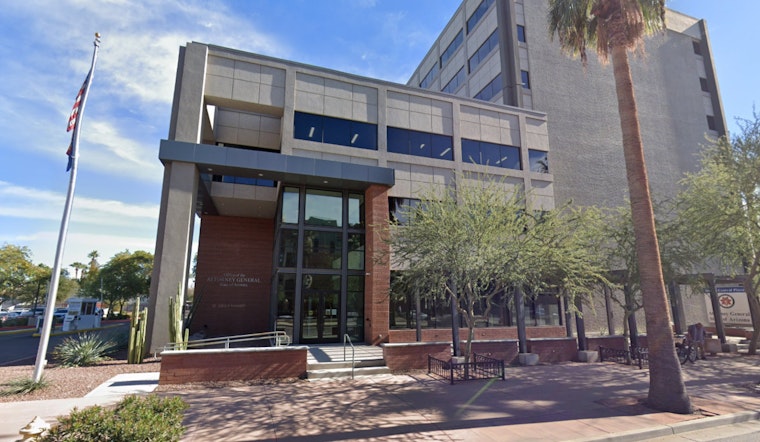
The future of internet and phone access for rural communities across Arizona hangs in the balance as the U.S. Supreme Court considers the fate of the Universal Service Fund (USF). Attorney General Mayes stands at the helm of a bipartisan effort, vying for the retention of the USF, which is crucial for maintaining connectivity in sparsely populated locales. This fund, in existence since the Telecommunications Act of 1996, plays a fundamental role in facilitating communication services that many deem indispensable in today's digital landscape.
"Access to reliable internet and phone services isn't a luxury—it's a necessity for schools, health care providers, and families in rural Arizona," Mayes said, emphasizing the stakes, according to a press release from the Attorney General's office. The Universal Service Administrative Company (USAC), a nonprofit organization, bears the responsibility for the administration of the USF, which has come under fire from a group challenging the extent of authority delegated to the FCC and subsequently to the USAC.
The legal scuffle stems from a 2021 challenge asserting that Congress has excessively empowered the FCC through the USF program to deliver universal telecommunications service; and in turn, that the FCC has overextended its power to USAC. Despite previous courts turning down such allegations, the full Fifth Circuit called into question the USF's constitutionality.
In response, Arizona, joined by 23 other states, has filed an amicus brief supporting the FCC. These officials collectively argue that, through the USF, the FCC has successfully and constitutionally disbursed the envisioned benefits put forth by Congress. The brief, which consolidates two related cases—Federal Communications Commission v. Consumers’ Research, No. 24-354 with Schools, Health & Libraries Broadband Coalition v. Consumers' Research, No. 24-422—illustrates the national reliance on the USF not just in Arizona, but throughout various states.
Given the high stakes of this legal determination, states including Colorado, Connecticut, Delaware, the District of Columbia, Hawaii, Illinois, Maine, Maryland, Massachusetts, Michigan, Minnesota, Nevada, New Jersey, New York, North Carolina, Pennsylvania, Rhode Island, South Dakota, Vermont, Wisconsin, and Wyoming are rallying alongside Arizona. The consensus among these representatives is clear: preserving the Universal Service Fund is tantamount to upholding the connectivity and, by extension, the well-being of America's rural communities.





