

























































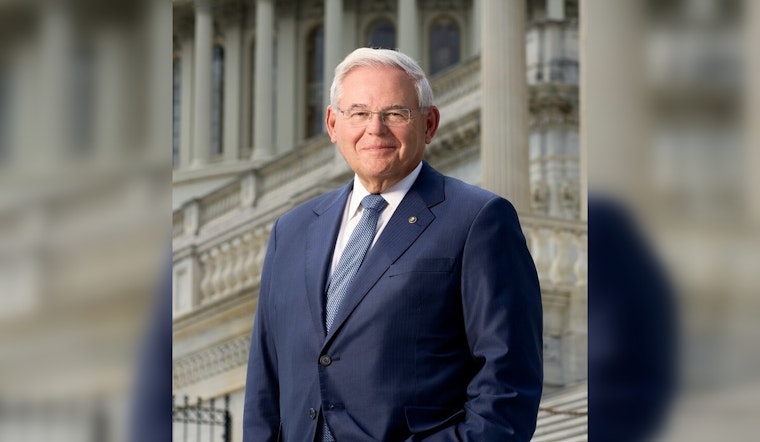
Former U.S. Senator Robert Menendez has been sentenced to 11 years in prison after being convicted of bribery, acting as a foreign agent, and obstruction of justice. Two New Jersey businessmen implicated in the scandal, Wael Hana (also known as "Will Hana") and Fred Daibes, received sentences of 97 months and seven years, respectively, according to a recent announcement by Danielle R. Sassoon, the United States Attorney for the Southern District of New York.
In a statement obtained by the Justice Department, U.S. Attorney Sassoon emphasized the gravity of the crimes committed by Menendez and his cohorts, which represented "an egregious abuse of power at the highest levels of the Legislative Branch of the federal government." Menendez was trusted to represent the interests of the United States and New Jersey, however, instead he leveraged his influential position for personal gain, engaging in corrupt dealings with businessmen and foreign entities, while obstructing justice to cover his tracks.
The trial unveiled a network of bribery that flourished from 2018 to 2022, with Menendez and his then-girlfriend, Nadine Menendez, accepting a smattering of lavish bribes from Hana and Daibes, these included gold, cash, luxury goods, and even funds to ward off foreclosure on Nadine Menendez's home. The FBI's search of Menendez's residence uncovered damning evidence, such as envelopes of cash, totaling $480,000 and luxury vehicles, further implicating the former senator.
Menendez's betrayal extended to the international stage, where he used his role as Chairman of the Senate Foreign Relations Committee to influence U.S. policy in favor of foreign governments, including Egypt and Qatar. According to the indictment, Menendez provided confidential governmental information to Egyptian officials and ghostwrote letters to persuade his Senate colleagues to release aid to Egypt. In return for these acts, Menendez was promised and received payments, some of which were funneled through a company, IS EG Halal Certified, Inc., that was unlawfully granted a monopoly by the Egyptian government. Menendez also intervened in legal matters to assist associates of Uribe and Daibes, pursuing a skewed justice to serve his and his associates' interests.
The case reveals a disturbing episode of political corruption wherein a high-ranking official misused his position to influence foreign policy and domestic legal proceedings. Menendez's actions, along with those of Hana and Daibes, were met with stern punishment as a signal that corruption at any level will encounter swift justice. Menendez's conviction and sentencing mark the end of a multi-year investigation and trial, reminding us that the rule of law stands resilient, even in the face of those who would seek to corrupt it.





.jpg)