

























































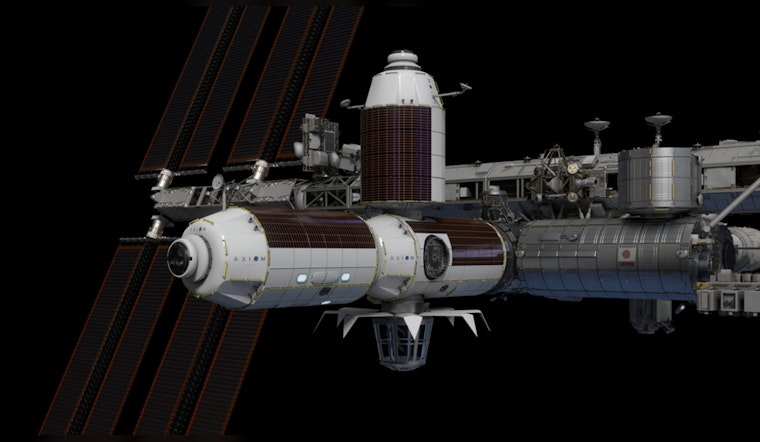
Axiom Space, a Houston-based company is reshaping how it plans to launch the world's first commercial space station, intending to make it operational in free flight sooner than initially expected. This development comes as NASA looks to transition from the International Space Station to new facilities in low-earth orbit past the 2030 mark. Axiom's modified launch sequence would see the payload power thermal module (PPTM) sent up first, a foundational move to reduce the time span its station is dependent on the ISS.
The revised plan, as stated by Community Impact, specifies the order of module launches into space, now beginning with the PPTM. Following up, are the habitat module one, the airlock module, habitat module two, and lastly, a research and manufacturing module equipped with an earth observatory. This adjustment not only expedites the process of achieving a free-flying station but also supports NASA's plans for a smooth transition as the ISS nears its decommissioning.
In a statement obtained by CultureMap Houston, Mark Greeley, Axiom Space COO and program manager for Axiom Station, underscored that the reassessment of their station development led to "opportunities for flexibility and enhancements." NASA has expressed its support for the altered launch sequence, which addresses its operational concerns regarding the ISS's deorbit and continues to support research and activities synonymous with the current space station.
The new Axiom modules will be constructed by Thales Alenia Space in Turin, Italy, before being shipped to Houston in fall 2025. Dana Weigel, NASA’s Johnson Space Center manager of the International Space Station program, noted the significance of the ISS's legacy and the importance of ongoing microgravity research. "As we approach the end of [the] space station’s operational life," she said, "it’s critically important that we look to the future of [low-earth orbit]" and ensure continuous presence in microgravity environments, as reported by CultureMap Houston.
Tejpaul Bhatia, Axiom Space's chief revenue officer highlighted the collaborative nature of this endeavor. "Working with leading experts like Thales Alenia, who have a proven record in module development and a strong relationship with NASA, is integral to our operations and vision," he mentioned, emphasizing the diverse global customer base as not only governments but also private entities and research institutions, which he believes demonstrates that space exploration is a collective endeavor for all of humanity, as noted by CultureMap Houston.





