

























































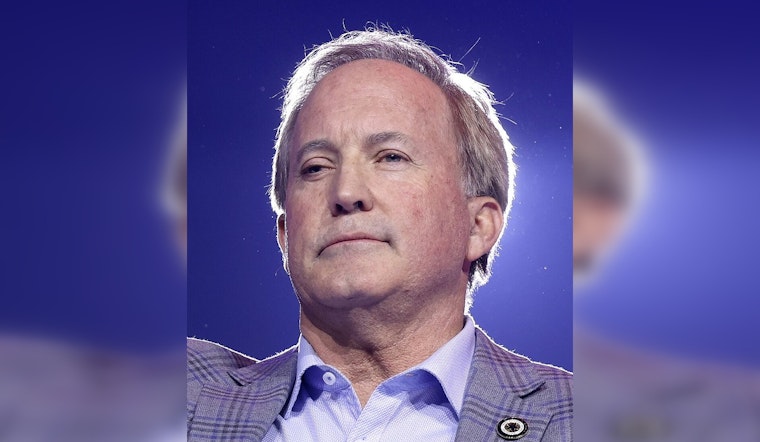
Texas Attorney General Ken Paxton has opened a formal investigation into the American Academy of Pediatrics, alleging the pediatricians' group may have promoted childhood vaccines for financial gain rather than sound medical evidence. The inquiry is examining whether financial relationships with pharmaceutical companies, rather than independent science, shaped the AAP's vaccine recommendations. The investigation is ongoing.
The Texas Attorney General's Office issued a Civil Investigative Demand to the AAP seeking information about the basis for its childhood vaccine recommendations and its role in shaping national immunization guidance, according to Click2Houston. So far, the AG's office has announced no findings or allegations of wrongdoing against the organization, and the demand itself is not a legal determination against the AAP.
No Findings Yet, But a Broader Probe Behind It
The demand to the AAP grew out of a wider investigation Paxton's office launched in January 2026, sending more than 20 Civil Investigative Demands to pediatric medical providers, insurance companies including UnitedHealthcare, and vaccine manufacturers such as Pfizer, according to the Office of the Texas Attorney General. That broader inquiry examines potentially deceptive recommendations related to childhood vaccines across the industry.
Paxton said parents deserve vaccine recommendations driven by science and their children's best interests, not financial gains or bribes from pharmaceutical companies, the outlet reported. He added that if the AAP's medical guidance turns out to be fueled by financial incentives, his office will expose and end the unlawful behavior. The stakes for drugmakers are real, since pharmaceutical companies could face financial losses if fewer vaccines are ultimately recommended under a revised federal schedule.
AAP's Break From the Federal Vaccine Schedule
The dispute traces back to changes the U.S. Department of Health and Human Services made to the federal childhood vaccine schedule. Under Secretary Robert F. Kennedy Jr., HHS cut the routine recommended vaccine count from 17 to 11 in January 2026 and shifted shots for seasonal flu, COVID-19 and HPV to shared clinical decision-making between doctors and parents, according to Legis1. In response, the AAP published its own independent childhood immunization schedule in August 2025, breaking with federal guidance for the first time in its history.
The AAP sued HHS over the schedule overhaul, arguing the changes lacked a scientific basis. A federal judge sided with the group in March 2026, issuing a preliminary injunction that blocked the HHS revisions and ruled the administration's restructuring of the CDC's Advisory Committee on Immunization Practices was unlawful, according to AAP News.
Medical Groups Rally Behind the Pediatricians
Twelve major national medical organizations representing more than 1 million healthcare professionals, including the American Medical Association and the American Academy of Family Physicians, formally endorsed the AAP's independent schedule in early 2026, per HealthyChildren.org. The AAP had worked alongside the CDC and other organizations for decades to develop and promote the federal childhood immunization schedule before the rift, and it has also encouraged insurers to cover every vaccine it recommends. Pharmaceutical companies are among the AAP's top corporate donors, a detail central to Paxton's suspicion of financial influence.
Paxton's Long Fight With Pfizer and the State's Doctors
This isn't Paxton's first legal clash over vaccines. He sued Pfizer in November 2023 under the Texas Deceptive Trade Practices Act, alleging the company misrepresented COVID-19 vaccine efficacy; a federal judge dismissed that case in December 2024, and Paxton filed an appeal in January 2025, as Hoodline reported in its earlier Pfizer coverage.
Paxton also sparred with the Texas Medical Association last October after the group encouraged physicians to consult guidance from professional organizations, including the AAP, alongside revised federal recommendations on pediatric COVID-19 vaccines, according to The Texas Tribune.
Texas Vaccination Rates Keep Sliding
The fight unfolds as Texas's own school vaccination numbers have been sliding. Following passage of House Bill 1586 in the 2025 legislative session, the Texas Department of State Health Services updated its rules to let parents download and notarize official vaccine exemption affidavits online rather than requesting paper forms by mail, per the Texas Department of State Health Services.
Non-medical, reasons-of-conscience exemptions among Texas K-12 students reached 3.24% in the 2022-2023 school year, nearly double the rate from a decade earlier and 27 times higher than in 2003, according to The Immunization Partnership. For the 2024-2025 school year, Texas led the nation with more than 25,000 kindergarteners not fully vaccinated against measles, pushing the state's MMR vaccination rate down to 93.24% — its lowest point since at least 2011 — amid a measles outbreak in West Texas, the outlet reported. Scenes like a Houston child, then-4-year-old Mateo Cardona, receiving a vaccine at Texas Children's Hospital in June 2022 illustrate the kind of routine childhood immunization now caught in the crossfire, the outlet reported.
States Split Over Vaccine Policy
The divide extends beyond Texas. California and Connecticut attorneys general announced plans in February 2026 for multistate legal challenges supporting evidence-based pediatric vaccine schedules, highlighting how differently state officials have responded to the federal shift, according to CIDRAP. Whether Paxton's office will uncover evidence of unlawful financial kickbacks tied directly to the AAP's guidance — and how Texas courts will weigh a Civil Investigative Demand against a national professional organization headquartered outside the state — remains unresolved.





