

























































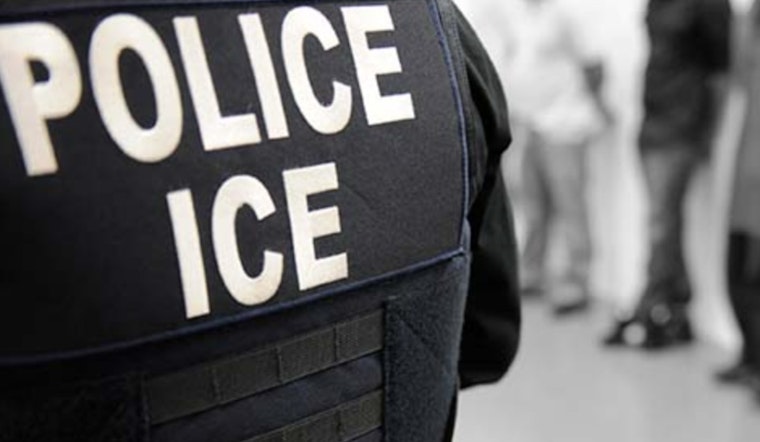
Amid swirling rumors and palpable tension in immigrant communities across Houston, officials from Immigration and Customs Enforcement (ICE) have sought to clarify their operational stance and procedures as President Trump begins his second administration. According to a representative from ICE, no indiscriminate raids or sweeps targeting undocumented individuals have occurred in Houston.
In an interview obtained by Click2houston, an ICE official emphasized that the agency's actions in Houston are "routine, targeted enforcement operations." The official noted that these operations are fundamentally geared toward individuals deemed "threats to public safety, national security or border security," including those with pending criminal charges or convictions.
During these operations, a large majority of arrests were of individuals previously housed in Houston jails, ICE highlighted, insisting that their approach is consistent and targeted. There is currently no separate arrest data available specifically for the Houston area, but ICE pointed out that their Houston Enforcement & Removal Operations (ERO) had the highest number of immigration-related arrests of undocumented individuals with pending criminal charges or convictions in the fiscal year 2024.
Further details were provided in a Fox26 Houston interview with Bret Bradford, the Houston Field Office Director, who explained that their EROs are designed as targeted actions. In fact, "We don't do sweeps, we don't do raids, enforcement removal operations, we do targeted operations only. We may encounter collateral subjects who are subject to removal as well," Bradford said.
Despite these clarifications, the broader immigration strategy has notably shifted under the new presidential mandate. President Trump unleashed a bevy of executive orders and signed the Laken Riley Act which expands the list of criminal charges that can result in detainment by DHS. Now, agencies like the FBI, DEA, and ATF are encouraged to assist ICE in enforcing these expanded immigration policies. One notable executive order discarded a previous protection that prohibited immigration enforcement from operating within sensitive locations such as schools and places of worship.
Tangible effects of policy changes are evident in daily postings of national arrest statistics by ICE since January 23. Although there's an absence of granularity on the nature of these arrests, ICE's national figures for fiscal year 2024 accuse or convict 71% of those arrested of crimes. Meanwhile, on the ground, immigration lawyer Magali Suárez Candler indicates a growing unrest among immigrants. "Who was deported? Are they being detained? Are they allowed to see immigration judges or are they all being put on planes? I don't really know, but we'll see," said Candler, suggesting those who encounter ICE should request to see a warrant, speak to their lawyer, and be seen by an immigration judge, as reported by Fox26 Houston.



