

























































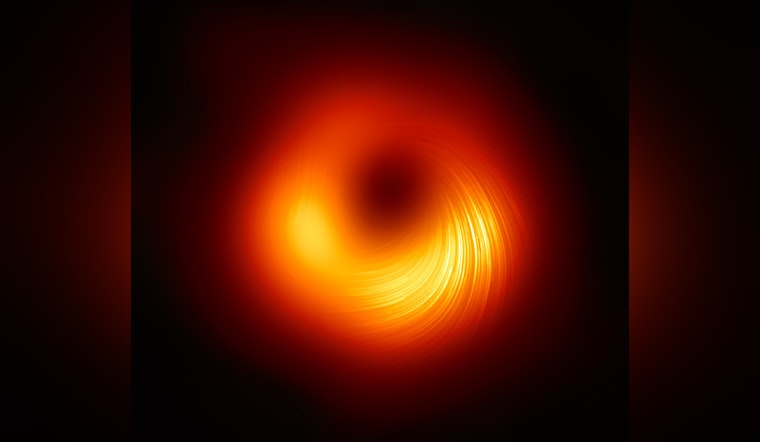
MIT astronomers have observed strange changes in the x-ray emissions of a supermassive black hole, 1ES 1927+654. First noticed in 2018 when its corona vanished and later reformed, the black hole is now showing x-ray flashes that are speeding up over time, according to MIT News.
Megan Masterson, an MIT graduate student, said, "Then we noticed something that has never really been seen before," referring to x-ray flashes speeding up from every 18 minutes to every seven minutes over two years. This change may be caused by a white dwarf in a dangerous orbit near the black hole, shedding mass into it. Erin Kara, an MIT professor, added, "If this scenario is correct, this white dwarf is right at the turn around point, and we may see it get further away," as stated by MIT News.
MIT astronomers discovered surprising X-ray flashes from the supermassive black hole 1ES 1927+654, showing its unpredictable behavior. Their research may benefit from the European Space Agency's Laser Interferometer Space Antenna gravitational-wave detector, launching in the mid-2030s, which will help study such systems. As Masterson said, "The one thing I've learned with this source is to never stop looking at it because it will probably teach us something new." The team's findings were shared at the 245th American Astronomical Society meeting and are available on MIT's News site.




