

























































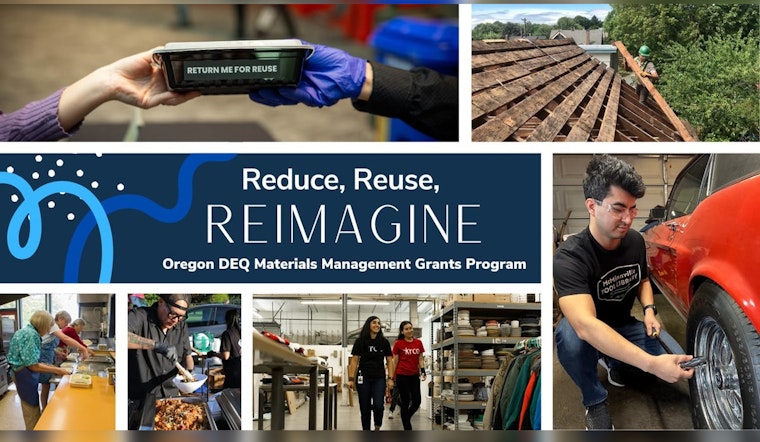
Earlier this week, the Oregon Department of Environmental Quality (DEQ) took a significant step towards waste prevention by awarding $1.2 million in Reduce, Reuse, Reimagine grant funds to various projects throughout the state. A total of 14 recipients in 11 counties were selected for their innovative approaches to waste reduction, following a highly competitive process that drew 110 applications.
The granted projects aim to boldly reduce the environmental and human health impacts of material through its full lifecycle—a testament to the DEQ's commitment to environmental stewardship and community health. "The grant program supports statewide efforts to reduce the environmental and human health impacts of materials at all stages of their lifecycle," Haley Miller, DEQ Grants Coordinator, said in the official statement.
Among the noteworthy projects funded, the Central Oregon Environmental Center in Bend will introduce reusable food serviceware at food cart pods, and Klamath Works in Klamath Falls plans to update a thrift store dedicated to construction materials. In Portland, Bold Reuse is establishing a reusable food ware program for major venues, the city’s Bureau of Planning and Sustainability is expanding deconstruction programs, and the Immigrant and Refugee Community Organization will create a market for reusable goods.
This year's grant focus was squarely on waste prevention. The agency aims to encourage changing product design, promoting the utilization of items longer, repairing goods, and using less—in an effort to diminish the generation of waste before it can even think to become trash or pollution.
From the revival of a program paused in 2020, the DEQ has now reopened doors to local capacities for handling the environmental, social, and health impacts wrought from the production, consumption, use, and disposal of products. In expressing gratitude, Sanne Stienstra, DEQ Materials Management Program manager, noted, "Your work enriches our collective efforts to reduce the environmental and human health impacts of materials at all stages of their life cycle," as noted by Oregon State's official website.


