

























































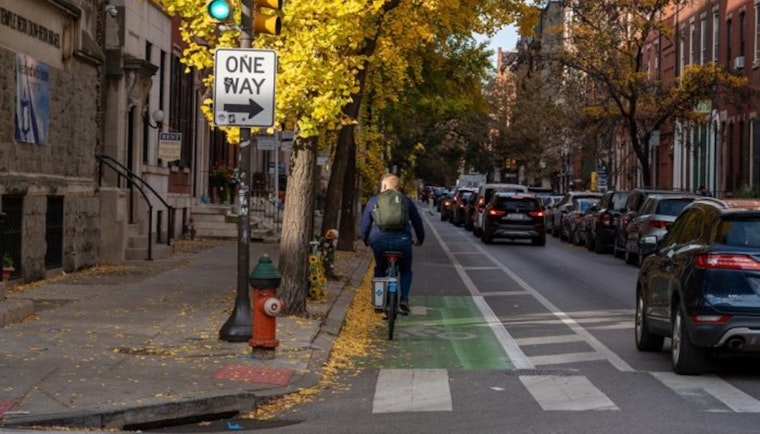
The City of Philadelphia is steering towards safer streets, pushing for improvements to the Spruce and Pine Streets corridors with the Bike Lane Safety Upgrades project, as per the latest update. Philadelphians had their say last October, flocking to Jefferson University for a public open house jointly hosted with Washington Square West and Society Hill Civic Associations, where nearly 400 people weighed in on the enhancements. Out of those who completed exit surveys, the majority were residents of the area, with an overall 4.1 out of 5 stars approving the city's proposed plans, as detailed on Philadelphia's government website.
The feedback came from in-person conversations, over 130 emails, and exit surveys. These responses were compiled into a comment and response table covering topics from parking issues to bike lane designs, with some details still in progress. Through discussions with local institutions, residential groups, and the Philadelphia Parking Authority (PPA), the city refined its loading zone layout recommendations for each block. The public can now review these plans.
January 13 marked the first meeting of the Spruce & Pine Stakeholder Working Group, an assemblage endorsed by the City Council and inclusive of heavy hitters like Washington West Civic Association, Society Hill Civic Association, and the Bicycle Coalition of Greater Philadelphia, as per the City of Philadelphia. The meeting set the stage for discussions on Phase 1: Curbside Regulations, presenting updated "No Stopping Anytime" regulations alongside the blueprint of new loading zones set to be implemented come the early spring of this year. The details emerged as the steering committee delved into the elements of Phase 2: Infrastructure that promises to stitch the fabric of the street landscape with safety as the thread that binds.




