

























































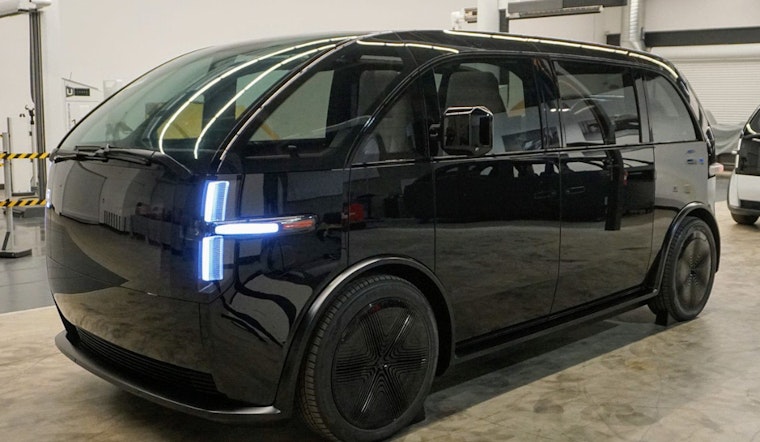
It's official: Texas-based electric vehicle company Canoo has hit a dead end after filing for Chapter 7 bankruptcy and ceasing all operations. According to a press release confirmed by FreightWaves, the liquidation process is underway in the Delaware Bankruptcy Court, overseen by a bankruptcy trustee. Canoo, once a promising player in the medium-duty EV market with high-profile partnerships including NASA, the Department of Defense, and Walmart, has been unable to secure essential financing to keep the wheels turning.
Despite efforts to aggressively seek out capital from foreign sources and through the U.S. Department of Energy’s Loan Program Office, Canoo could not manage to steer clear of bankruptcy. With assets around $126 million dwarfed by liabilities exceeding $164 million, the company's financial road has led to a dead end. "We would like to thank the company’s employees for their dedication and hard work," Canoo’s Chairman and CEO Tony Aquila told FreightWaves in a statement. "We are truly disappointed that things turned out as they did."
The ride to insolvency wasn't without its bumps. Canoo faced various obstacles leading up to the bankruptcy, including furloughing employees and idling its Oklahoma City factory. As reported by Chron, the company showed signs of financial distress long before the bankruptcy. In August, a significant number of the LA-based workforce was asked to relocate to Texas or Oklahoma, coupled with the layoff of nearly 60 staff members. A once 8,000-square-foot facility in Justin, Texas, fell silent, indicating the downward spiral was quickly accelerating.
Financial troubles were further exacerbated by executive departures and an apparent lack of cohesive strategy. Last October saw the resignations of CFO Greg Ethridge and general counsel Hector Ruiz amidst a pivot to concentrate more on commercial fleets than consumer sales. Canoo had also taken substantial loans from a financial firm owned by Aquila, with reported interest rates raising eyebrows and adding extra pressure. The EV market, as per a statement obtained by FreightWaves, shows that Canoo's story is not an isolated incident but a part of a broader pattern of volatility within this high-stakes industry.
With the dust still to settle, Canoo’s bankruptcy and upcoming asset liquidation could ripple through its supply chain, affecting partners and suppliers. Some, like Kistler Instrument Corp., are already seeking legal recourse for unpaid bills. Still, as mentioned by Chron, Walmart may not feel the pinch from the company's collapse due to a nonbinding EV purchase agreement. While the end of the road for Canoo is apparent, the electric vehicle industry braces for the potential impact and the possible scavenging of Canoo's technological remains by companies looking to expand their EV capabilities.





