

























































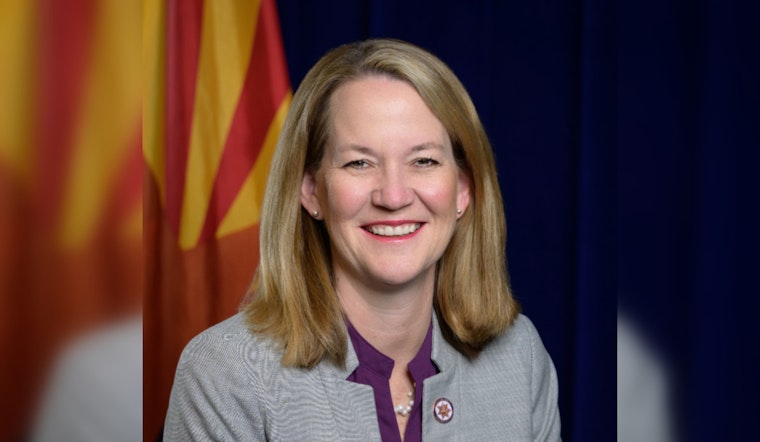
Addressing what many see as a growing blight on local economies and public safety, Attorney General Mayes has rallied with a 38-state bipartisan coalition, calling on Congress to make a move against the uptick in organized retail crime. In a united front, this coalition is pressing for legislative action that's more than just a band-aid solution.
According to a press release, Mayes has recognized the depth of the issue, not only in the sphere of retail but in the lives it disrupts. "Organized retail crime isn’t just about stolen merchandise—it’s about criminal networks exploiting communities, threatening workers, and driving up costs for families." These words aim to shake Congress into implementing stronger measures to crack down on these crimes.
This coalition isn't just crying foul without backing it up with some sobering figures. The estimated hit to the U.S. economy is massive, reaching over $121 billion due to organized retail crime. Moreover, it's reported that a staggering 76 percent of retail asset protection managers have witnessed violence against employees stemming from these criminal activities, which involve cargo theft, causing a ripple effect that jacks up prices for everyday goods like clothing to baby formula.
In the battleground of legislation, the 118th Congress saw the introduction of bills aimed at setting up a structured response to the crisis, including H.R.895/S.140 – the Combating Organized Retail Crime Act of 2023 and S.139 – the Organized Retail Crime Center Authorization Act of 2023. These were drafted to arm the state and federal agencies with the necessary firepower for battling these crime rings. However, in progress made by the previous Congress, now, the AGs are pushing the 119th Congress to step up and reintroduce these bills with even tougher penalties to deter the theft of goods in transit.
Several standout attorneys general from Connecticut, Georgia, Illinois, and South Carolina, have led the charge, according to the coalition's letter, working on building task forces and prosecution units designed to combat this problem. They believe that legislation floated during the 118th Congress would help improve the coordination between state and federal bodies and create an Organized Retail Crime Coordination Center under the Department of Homeland Security auspices, crucial for tackling the intricate web of cross-border criminal activities.
Attorney General Mayes is in good company, joining forces with officials from Alabama, Alaska, Arkansas, Delaware, the District of Columbia, Florida, Hawaii, Iowa, Kentucky, Louisiana, Maryland, Michigan, Minnesota, Nebraska, Nevada, New Hampshire, New Jersey, New Mexico, New York, North Carolina, Ohio, Oklahoma, Oregon, Pennsylvania, Rhode Island, South Dakota, Tennessee, Utah, Vermont, Virginia, the U.S. Virgin Islands, Washington, and West Virginia, all adding their names to this clarion call for congressional action. A copy of the coalition's letter has been made public for those looking to grasp the full scope of this legislative push.





