

























































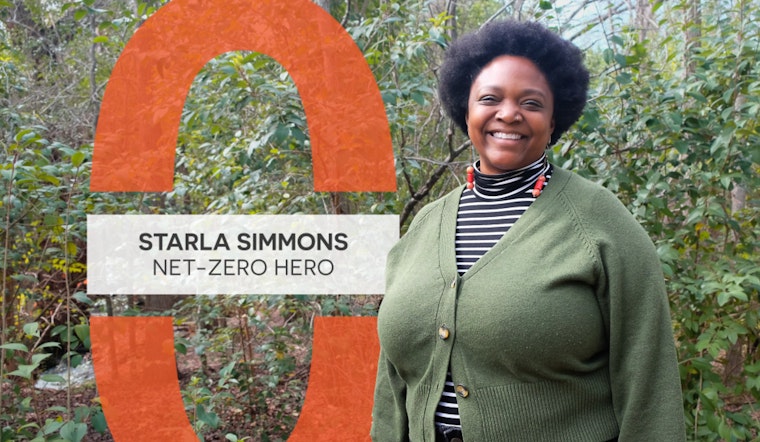
Austin's progress toward a net-zero future has been championed by local social worker, eco-therapist, and educator Starla Simmons, her work integrating environmental justice into community care is garnering attention, in an article published by the City of Austin's website, Simmons was highlighted for her 15-year dedication to these causes as well as her efforts to address the connection between natural spaces and social wellbeing, particularly within communities of color.
Simmons' journey was detailed in the feature, revealing her focus on ecotherapy and the implementation of nature-based activities in her social work—echoing the importance of connection to nature for wellness and its role in the fight for social justice, despite challenges like the lack of green spaces in East Austin or the historical obstacles faced by Black and Indigenous communities in accessing land. In her work, Simmons aims to re-establish such connections and confront the injustices that overshadow them. One innovative approach by Simmons has been the development of a training session titled "Healing in Nature," which she has conducted for various audiences, discussing the significance of BIPOC connection to the environment.
In addition, Simmons has been actively involved in enhancing academic understanding and practical application of environmental justice within the social work field—guest lecturing and shaping the curriculum at The University of Texas at Austin's School of Social Work, and fostering the start of an Environmental Justice and Ecotherapy student group (EJET) which she has been supporting as Faculty Liaison for the last six years. Simmons told the City of Austin's website, "A student in my first graduate-level cohort started EJET at UT, a student group for Environmental Justice and Ecotherapy," demonstrating Simmons' role in inspiring action and ideation amongst young leaders.
When asked about the most rewarding aspects of her work, Simmons shared stories of transformation and enlightenment she witnessed, "During my ecotherapy trainings, there is always at least one person (often a person of color) who has deeply reflected on their own relationship with nature and has an ‘aha!’ moment," a sentiment she captured in her interview with the City of Austin. But also, she points to the challenges faced, particularly the historical erasure and stigma that have to be painstakingly overturned in restoring intrinsically human connections to the land and nature.
Simmons also emphasized the significance of enabling young leaders to drive sustainability and echoed the sentiment that organizations and authorities should honor youthful experiences and grant them space for their views and anxieties, especially concerning their environmental future. In the interview, she elaborated on this, saying, "It’s our job as adults to hold space for all those feelings and realities," reflecting her philosophy of meeting individuals where they are in their environmental journey. On the influence of Outdoor Afro, a national non-profit changing the narrative around African Americans' engagement with the outdoors, she said it "really kicked the stigma and stereotypes about WHO enjoys nature and, more importantly, HOW people enjoy nature."
For those looking to delve deeper into the interlacing of culture, identity, and ecological connection, Simmons recommended several books including "Braiding Sweetgrass" by Robin Wall Kimmerer and "Black Faces, White Spaces" by Caroline Finney. The Austin Climate Equity Plan also provides interested individuals with ways to contribute toward Austin's net-zero target; suggesting ways everyone can play a part in environmental advocacy and action.




