

























































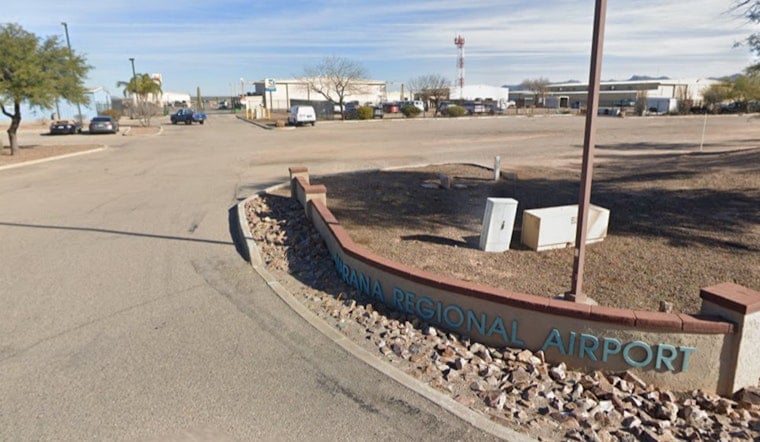
Last week, an alarming incident at Marana Regional Airport near Tucson, Arizona, brought forth national concerns about air traffic control systems. Two small planes collided in midair, with one bursting into flames upon crashing, tragically leaving two individuals dead, according to ABC15. This mishap is the most recent in a series of aviation accidents drawing scrutiny to air traffic protocols, especially at airports lacking control towers like Marana.
Marana Regional Airport, handling tens of thousands of flights annually, does not have an air traffic control tower. Aviation safety experts argue that pilots are trained to communicate and operate safely using "see and avoid" tactics. However, this accident has led to debate whether the presence of a tower might have been able to prevent such a tragedy. "One plane was attempting a touch-and-go when another clipped its propeller while attempting to land," Erwin Castillo, a flight instructor for IFLY Pilot Training, explained to ABC15, capturing the dramatic ordeal as it occurred. The Associated Press reports that only about 10% of the 5,100 public airports in the US have towers, meaning the vast majority of aviators rely on such methods regularly.
In the wake of this collision, a timely review is underway to determine the cause and how it may inform future safety measures. The Federal Aviation Administration (FAA) oversees such protocols and the modernization of air traffic control systems, including the planning of new towers. Through the FAA, airports can seek federal grants for modernizing existing infrastructure or building new towers. Marana's airport itself was set to build a tower by 2029.
These safety discussions have been propelled onto the national stage with past events, such as the 1956 Grand Canyon collision that claimed 128 lives, drastically influencing aviation safety regulations. President Trump also recently enacted a memorandum addressing air traffic safety, which particularly queried the FAA’s hiring practices, suggesting a move away from merit-based recruitment posited by previous administrations. Despite this, Trump's administration ensured that no critical safety personnel, such as air traffic controllers, were let go in recent federal job cuts, a move that has been challenged by industry groups who claim understaffing issues already exist, as mentioned in an ABC15 report.




