

























































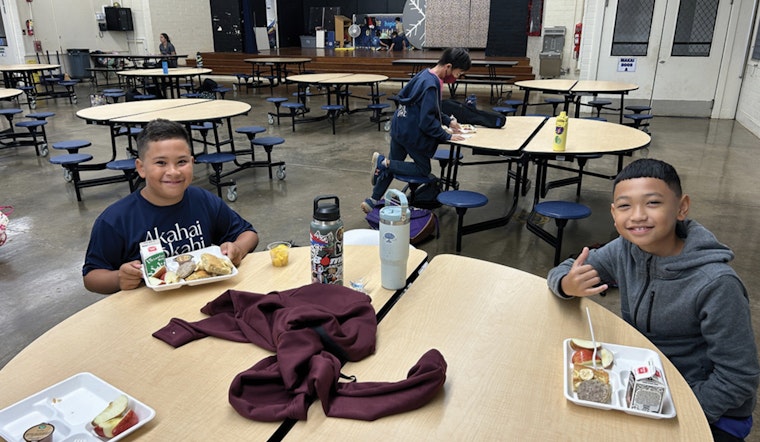
Hawai'i's school breakfast menus have introduced a new addition featuring local apple bananas. As part of an initiative to support food sustainability, banana (mai’a) sheet pancakes have been added to the menu at public school cafeterias statewide. According to a recent release from the Hawai'i State Department of Education, the pancakes are made with locally grown apple bananas and have been well received by students at Kāneʻohe Elementary.
"It was really good, one of the top breakfasts I had," fourth grader Beau Makua told the Hawai'i State Department of Education. For fifth grader Logan Park, the pancakes represented the pinnacle of cafeteria cuisine. "I felt like it was the best breakfast that we've ever had over here," said Park. "Probably because of the taste of the pancake and the type of banana it was. I feel like local bananas are the best out of all bananas." The response at Kāneʻohe reflects a wider trend in Hawai'i's educational system, where the focus on locally-sourced school meals aligns with ongoing efforts toward sustainability and health.
These pancakes are part of a broader initiative under Act 175, which focuses on improving student health and supporting local agriculture. By replacing imported fruits with locally sourced options, Hawai'i public schools aim to provide better nutrition for students while supporting local farmers. During the rollout of this program, approximately 2,135 pounds of local apple bananas were distributed to 92 participating schools.
The Hawai'i State Department of Education's initiatives go beyond banana pancakes. As the largest institutional consumer of food in the state, Hawai'i public schools serve over 100,000 meals daily. This provides an opportunity to influence the dietary habits of students while supporting a local food economy.





