

























































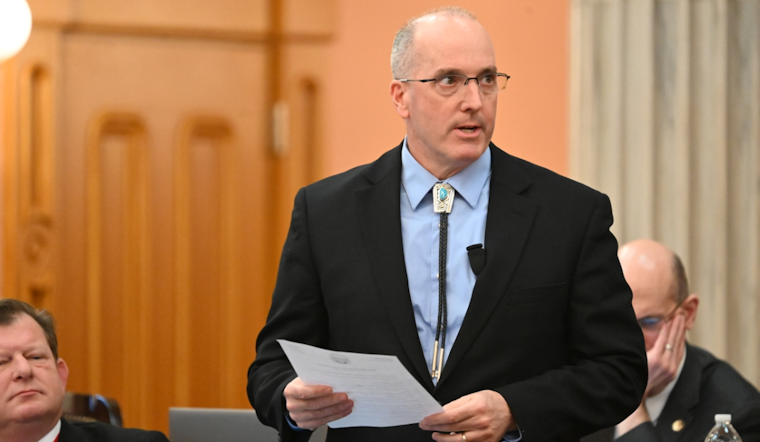
The Ohio House of Representatives has passed a bill to set September 19th as Stillbirth Prevention Day, aiming to spread awareness and improve health outcomes for both mothers and infants. House Bill 4, as introduced by State Representative Adam Holmes (R-Nashport), seeks to usher in a day dedicated to educating the public on the pervasive issue of stillbirth in the state and optimizing healthcare practices and resources for expectant mothers. "We hope that raising awareness of stillbirth issues in Ohio saves lives of mothers and babies, accelerates improved birthing practices, and unifies all of us—men and women, urban and rural—into continued cooperative support in the pursuit of healthier lives for all Ohioans," mentioned Holmes, as reported by the official website of the Ohio House of Representatives.
Stillbirths—defined as the loss of a baby at or after 20 weeks of pregnancy—affects 1 in 175 births across the United States, with about 21,000 instances annually, according to data from the Centers for Disease Control. Ohio's figures in 2021 revealed a grim reality, with 760 babies lost to stillbirth, which surpasses the national average. This new legislation comes in light of these statistics, highlighting a need for focused educational campaigns and healthcare interventions within Ohio.
House Bill 4 is now on its way to the Ohio Senate, awaiting further evaluation and, potentially, ratification. If enacted, this new observance day could serve as a rallying point for healthcare providers, policy-makers, and communities to come together and address a deep-seated challenge with grave implications for families across Ohio.
The designation of Stillbirth Prevention Day could prompt new conversations and strategies centered on preventive measures, research, and support mechanisms. As the state grapples with rates that eclipse national figures, the need for concerted action and the impetus provided by House Bill 4 becomes increasingly pertinent. The initiative reflects a broader understanding that awareness is only a first step, albeit a critical one, in curbing the distressing phenomenon that shadows many Ohioan families each year.




