

























































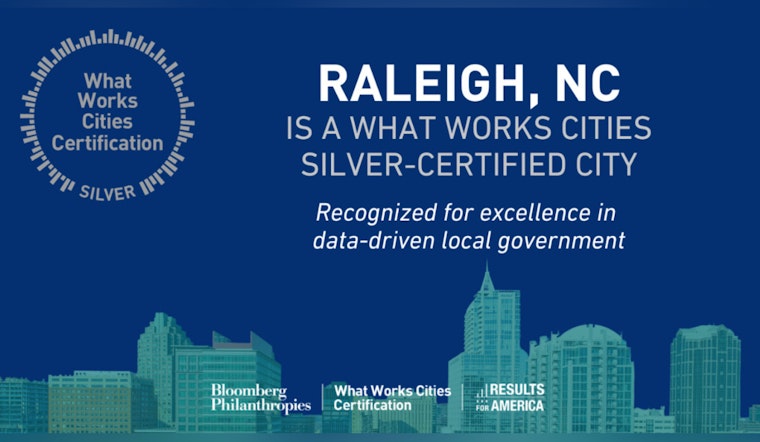
Raleigh just scored a solid win in the data-driven governance game, securing the Bloomberg Philanthropies What Works Cities Certification at the Silver level. It’s kind of like the Olympics for city data geeks—except instead of medals, they’re graded on how well they use data to improve lives. Raleigh's performance earned them 51–67 percent of the available points across 43 criteria, placing them squarely in the silver bracket, according to a recent announcement by the City of Raleigh.
Raleigh's Mayor Janet Cowell seems to be pretty chuffed about the whole thing, saying, "I am proud but not surprised that Raleigh continues to achieve recognition for effectively using data and science to drive outcomes." She went on to give a shout out to the city staff, bragging about their devotion "to developing the data and using it to implement the solutions that improve the lives of our residents." And let's be honest, it's nice to see government folks using spreadsheets and stats to actually make things better – like the time they used their number-crunching prowess to figure out where to plant 700 new trees, as per the City of Raleigh.
But this isn't just a Raleigh's-shining-moment story, it's part of a bigger picture where over 100 cities are jumping on this data-driven bandwagon. They're not just talking the talk; they're walking the walk, crunching digits to show exactly how and why the stuff they do works (or doesn’t). And according to Rochelle Haynes, Managing Director of the Bloomberg Philanthropies What Works Cities Certification, this is super critical. She told City of Raleigh's media kids, "At a time when people are questioning the role of government, and what good government looks like, governments must be better at using data to know what is and isn’t working."
This whole certification shebang has turned into a north-to-south, continent-spanning roll call. Among the new inductees into the data-nerd hall of fame, from Canada to South America, Raleigh's in good company with cities like Calgary, Hamilton, and Winnipeg, as well as Burlington, Fort Lauderdale, and Fort Worth. It even stretches all the way down to Maipú and San Fernando in Chile. Basically, it's these cities' way of showing that they’re willing to seriously fish through piles of data to make decisions that aren’t just guesses.





