

























































Boulder has long been a cradle for innovative spirits and creative ventures, and in the realm of architecture and design, women have been actively shaping its aesthetic and functional contours for decades. Among these trailblazers is Margaret Williams Read, Boulder's first female architect, whose legacy extends far beyond her drafting table. Born in 1892, Read moved to Boulder for academic pursuits, eventually graduating from the University of California School of Architecture in 1920, later she became an influential educator at the University of Colorado and in Los Angeles, according to historical records from the Carnegie Library for Local History.
Read's design collaborations spanned several prominent Boulder buildings, including fraternity and sorority houses, churches, and nurseries, all while she grappled with "the problem of fraternity house planning," according to the City of Boulder. The domiciles she fashioned, like the Pi Beta Phi Sorority House and her own residence at 525 Mapleton Avenue, intricately woven into the tapestry of Boulder’s architectural history, Read's work is engrained in the city's very fabric, forever memorialized in Boulder's streets and avenues.
Alongside Read in the echelons of Boulder's architectural history stands artist and architect Eve Drewelowe, whose dual talents crafted spaces and canvases alike, with her academic journey prompting the University of Iowa to inaugurate its first master's degree in fine arts. A strategic partnership with architect Glen Huntington yielded the distinctive Drewelowe-Van Ek House, making a palpable mark on Boulder's residential landscape with its personalized "chateauesque-style," as noted by the Carnegie Library for Local History.
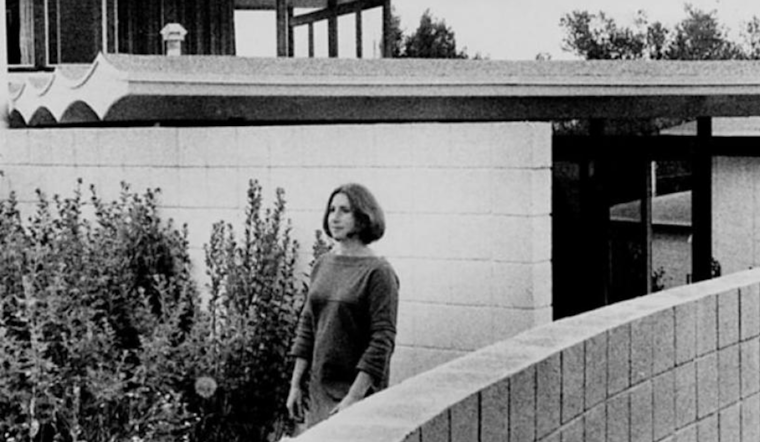
Bringing modernist leanings to Boulder's architectural array, Cecille Sirotkin, a protégé of Bauhaus masters and modernist visionary Ludwig Mies Van der Rohe, designed her Euclid Avenue home with Tician Papacristou, a testament to the city’s embrace of contemporary aesthetics, the house honored in 2025 as an individual City of Boulder landmark and is viewed as one of the most significant representations of modern architecture in Boulder, showcasing Sirotkin's lasting impact on Colorado's creative and legislative realms, her work not limited to the drafting table but extending into the halls of legislation and cultural programming.
Mary Sue Mullins, known as Sue, added her own brushstrokes to Boulder's architectural canvas, not as a formally trained architect but as a practical designer informed by architectural courses at the University of Colorado and the works of masters like Frank Lloyd Wright. Her designs, encompassing roughly 100 structures, centered on the principles of family living, echoing the everyday experiences of women in domestic settings, Sue Mullins’ practical and nuanced perspective on home design reveals a deep understanding of the rhythms and needs of daily life, as detailed by the Carnegie Library for Local History.





