

























































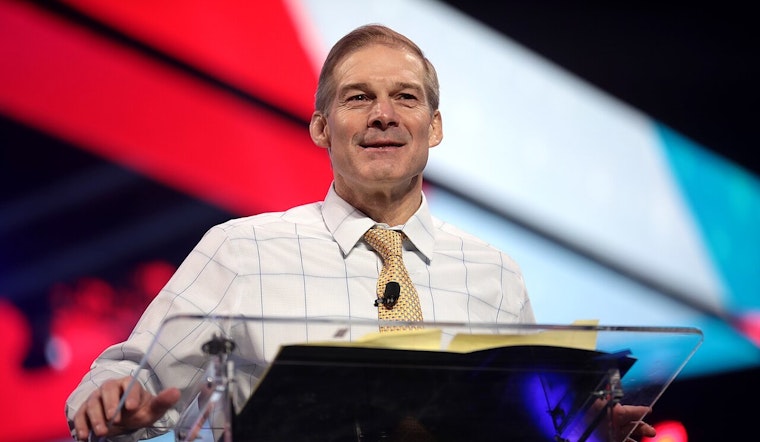
House Judiciary Committee Chairman Jim Jordan (R-OH) has taken an assertive stance against what he perceives as misconduct and overreach within the Department of Justice under the Biden-Harris Administration. Jordan has sent out a series of letters addressed to David Weiss and several DOJ officials, demanding their appearance for transcribed interviews before the committee. The chairman's move underscores the ongoing tensions between the Republican-led House committee and the Biden-Harris DOJ, as reported on March 18th by the House Judiciary Committee's press releases.
Throughout the 118th Congress, the House Judiciary Committee's attempts to engage with the DOJ were met with roadblocks. The Biden-Harris DOJ is accused of imposing tight scope limitations and instructing department witnesses to remain silent on a host of topics before the committee. According to a letter addressed to Special Counsel Weiss and available on the House Judiciary Committee's website, Chairman Jordan is anticipating the full cooperation of all witnesses summoned.
The list of those called to testify includes a number of high-ranking officials, among them J.P. Cooney, Mack Jenkins, Thomas P. Windom, Tina Ansari, Negar Tekeei, Sanjay Patel, and Anita Eve. This move signals a pointed effort by Chairman Jordan and his colleagues to delve into the operational conduct of the DOJ during the current administration.
Chairman Jordan's actions reflect a broader scrutiny faced by the Biden-Harris DOJ from congressional Republicans, who have previously raised concerns about the impartiality and political motivations of federal law enforcement. The specific details of the alleged DOJ "weaponization" remain to be unpacked in the upcoming interviews, which hold the potential to ignite further debate over the separation of partisan influence from judicial processes. The House Judiciary Committee's press material, including the full letter to Attorney General Pam Bondi, sheds light on the scope and direction of this inquiry, amplifying the clashing perspectives within federal oversight and enforcement.




.jpg)