

























































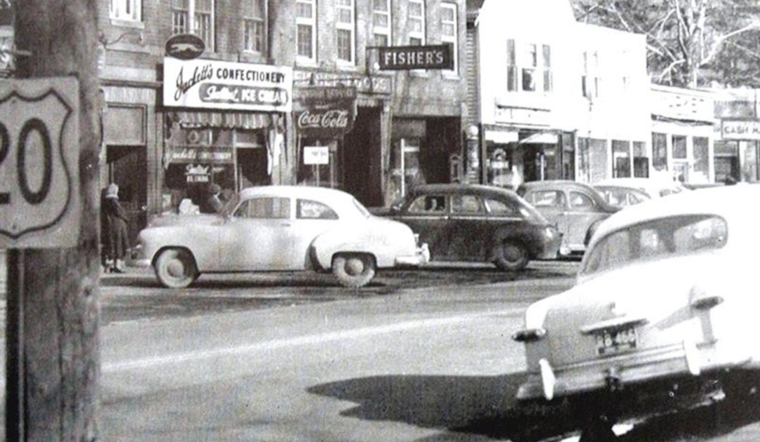
Mentor, a city brimming with history and transformation, was introduced to settlers in the late 18th century. Its roots reach back to Charles Parker, the first to lay claim to the area during Moses Cleaveland's survey expedition. His pioneering cabin was constructed in 1797 near the now bustling corner of Hopkins Rd. and Lakeshore Blvd. Over the years, this Ohio city has witnessed diverse developments—from agrarian beginnings to modern machinations.
The city has not only been a witness but also a shelter for various social initiatives. For instance, the Salvation Army spearheaded a farm colony to support the destitute in 1898, located at the intersection of Reynolds Rd.& Hodgson Rd. Although the endeavor was short-lived, barely spanning a decade, the area served as a summer camp for disadvantaged youth well into the 1960s, as mentioned on the City of Mentor's official website.
The cycle of redevelopment in Mentor has also revitalized the corner of Mentor Ave.. and Center St.. over the centuries. What once was a drug store, a mill, a library, a post office, and an inn and tavern has been reincarnated into a medical building—proving that the city's canvas is never static but constantly repainted by the needs and visions of its people.
Meanwhile, the original library building was moved in 1960 to Center St. & Nowlen St., and houses sweet indulgences as a confectionary shop. The Matchworks Building stands as a historic marker on Station St., its architectonic bones echoing its varied past. Since its inception in 1868 as the Hart Bolt & Nut Company headquarters, it has played host to knitting mills, chemical companies, and match manufacturers. Today, it's the hub for close to 30 small businesses. Not one to be bound by tradition, Mentor uncompromisingly encourages spaces to evolve and to meet contemporary markets adaptively.
Even the city's final rest has been subject to this four-season dance of change. Mentor's original cemetery, once located at Mentor Ave. & Center St., was uprooted in 1854 to make room for educational progress. A school was constructed in its place, signifying Mentor's commitment to future generations. More recently, the Great Lakes Mall, which opened its doors in 1961, laid claim to the large-scale archetype of modernized shopping experiences in the nation then. The Mentor Lagoons Marina & Nature Preserve complete the portrait of a city whose identity is characterized as much by its storied past as by the multitudes of potential futures it flirted with - from industry to recreation.
The tapestry of Mentor's narrative, documented diligently by the city itself, stands not merely as a record of times gone by but as a beacon, a testament to the relentless transformation inherent to Americana, and a reminder that our own cities are ever in the throes of becoming something new, something unforeseen, even as we tread familiar streets.





