

























































Montgomery County Executive Marc Elrich, accompanied by Dr. Thomas W. Taylor, superintendent of Montgomery County Public Schools (MCPS), recently showcased the Montgomery County Fiscal Year 24 Climate Action Plan Annual Report at Walt Whitman High School. The demonstration highlighted the substantial strides made in adhering to the county's comprehensive Climate Action Plan that aims at mitigating climate pollution, intensifying resilience to climate adversities, and detailing actions for fiscal year 2025, as highlighted on Montgomery County's climate action portal.
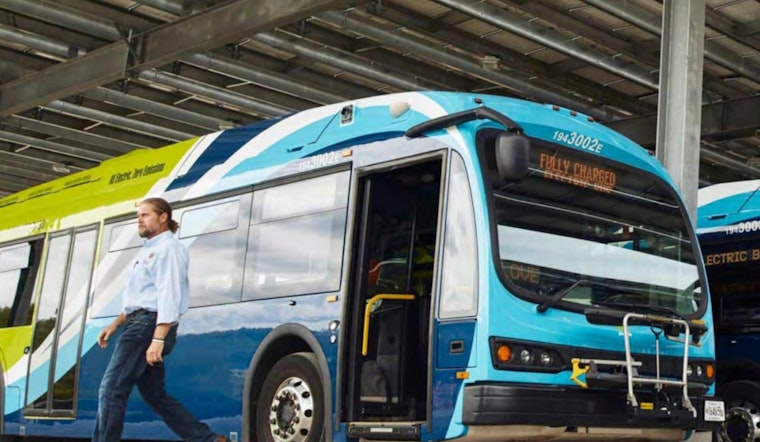
Among the achievements of the plan, which has set in motion 78 out of 86 actions, are the completion of the Zero Emission Bus Transition Plan with a vision of transforming the entire county bus fleet to zero-emission vehicles by 2035. Additionally, the Montgomery County Green Bank has channeled over $37 million in clean energy and climate-resilient projects, which in turn has drawn a noteworthy $129.5 million in total investment. More so, the Capital Area Solar Switch Program has managed to register 1,843 households for learning about and getting involved in a group buying program for solar power. These data points were shared by county officials during their visit to the academic academy focused on social justice at the high school.
"We've made real progress, but there's a lot more to do," Elrich expressed as he acknowledged the ongoing efforts in climate action. "This work is directly improving the air we breathe and the water we drink while making our communities more resilient and creating real economic opportunities in the clean energy sector," he added. A sentiment that resonates with the youth, who were present at the report presentation, and are expected to lead the charge in future environmental initiatives.
According to the detailed report, the county has not only laid the groundwork for energy-efficient buildings via regulations but has also focused on other environmental aspects, such as planting over 4,250 shade trees on more than 580 properties and expanding its Recycling and Reuse Program to accept a broader range of materials. This comprehensive approach underscores the county’s commitment to eight primary focus areas: Clean Energy, Buildings, Transportation, Carbon Sequestration, Climate Adaptation, Governance, Public Engagement, and Partnerships, all through a lens of Racial Equity and Social Justice to guarantee an inclusive benefit for all community members.
Dr. Thomas W. Taylor, while talking about the engagement of students in fighting climatic challenges, stated, "Their engagement in understanding and addressing environmental challenges is vital for building a sustainable future. Together we nurture their passion and commitment, and we are fostering a generation that will lead with innovation, resilience and a deep sense of responsibility for our planet." Furthermore, the Leadership for Social Justice Academy's incorporation into the MCPS curriculum emphasizes the role of education in equipping the youth to take action for the wellbeing of the planet.
For those interested in delving deeper into the details of the climate initiatives, the full Annual Report, covering the period from July 1, 2023, to June 30, 2024, is available on the county's climate action website. It offers insight into the progress made toward achieving the county's climate goals and the specific actions taken under each of the eight focus areas.



